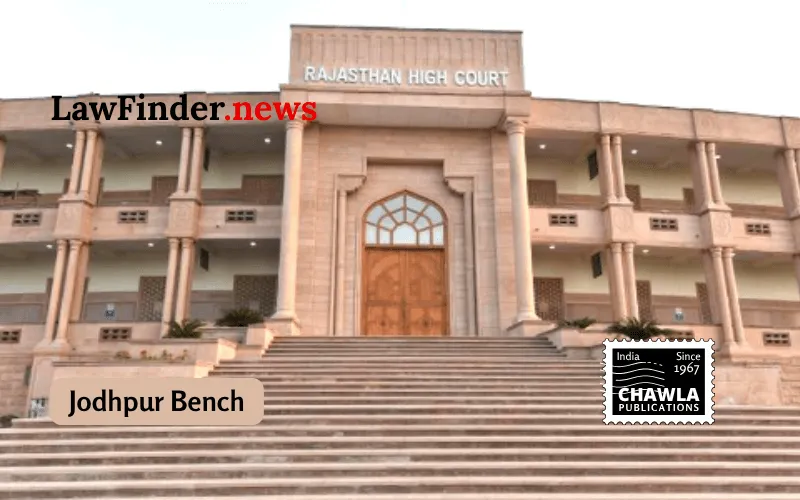
Jodhpur, May 13 Decrying the proposed felling of Khejri trees for solar power projects as a "stark example" of environmental destruction in the name of technological progress, the Rajasthan High Court has expressed hope that the state-appointed committee on tree protection will explore every viable alternative to prevent loss of "even a single tree".
A bench of Justices Arun Monga and Justice Sandeep Shah made the observations while disposing of a public interest litigation (PIL) filed by an NGO, Shri Jambeshwar Paryavaran and Jeev Raksha Pradesh Sanstha, seeking protection of Khejri trees in Rajasthan.
The bench directed that no trees shall be felled without prior approval in accordance with the law. It said that there should be due intimation to the committee constituted by the state government to examine the issue and suggest protective measures, including possible legislation.
Referring to the ecological significance of the Khejri (Prosopis cineraria), the court observed that the rare desert tree grows in sparse isolation in the arid region, yet is proposed to be cut to facilitate solar power generation.
"The irony is breathtaking," the bench remarked and questioned whether society was destroying nature in the name of technology.
During the proceedings, the state informed the court that it had already taken cognisance of the matter and constituted a special committee through an order dated March 9, 2026.
The committee has been tasked with undertaking a comparative study of tree protection laws in different states, consulting stakeholders and examining judicial decisions and existing legal provisions relating to tree conservation before preparing a draft proposal within a month.
The bench said, "We feel compelled to add, for the persuasive benefit of the above committee constituted, that, as a humanity, our march through technological evolution appears to have left a trail of environmental destruction. The case before us is a stark example."
"Are we as a society clearly not destroying nature in the name of technology, is the question for the committee to ponder. It is time we, as a community, face this uncomfortable truth head-on and find a solution.
"This court hopes and trusts that the committee will explore every viable alternative to avoid any further felling of even a single tree and permitting what would be an irreversible loss," the bench said in its order pronounced on May 8, which was uploaded on Wednesday.
The court also referred to the historic sacrifice associated with the protection of Khejri trees in 1730, when members of the Bishnoi community laid down their lives while opposing tree felling.
Drawing a parallel with the present situation, the bench observed that perhaps the time had come once again for the rulers of the day to issue a "farmaan" for the protection of trees and ecological balance.
The PIL had sought directions to stop the alleged illegal cutting of trees, particularly Khejri trees, without due procedure.
The petitioner organisation further urged the state government to enact a new Tree Protection Act similar to laws in other states or frame appropriate guidelines for the conservation of Khejri trees.
It also sought promotion of agroforestry on private and non-forest land across Rajasthan and a mechanism for compensatory plantation.
Appearing for the petitioner, counsel Vijay Bishnoi submitted that under the guise of the implementation of the state's solar power policy, existing green cover was being indiscriminately cleared.
He argued that the affected land was largely infertile and that Khejri trees were among the few species naturally suited to survive the harsh desert climate. The counsel also pointed to the emotional and religious significance attached to the tree by local communities.
Taking note of the government submission, the court observed that the desired result sought through judicial intervention appeared to have been substantially achieved and, therefore, no further interference was required at this stage.
However, liberty was granted to the petitioner to assist the committee in its deliberations and to revive proceedings in case any grievance survives.
Environmental activists and members of the Bishnoi community in Rajasthan have launched 'Save Khejri Movement', protesting against the proposed cutting of Khejri trees for solar power plant.
Jodhpur, May 13 Decrying the proposed felling of Khejri trees for solar power projects as a "stark example" of environmental destruction in the name of technological progress, the Rajasthan High Court has expressed hope that the state-appointed committee on tree protection would explore every viable alternative to prevent the loss of "even a single tree".
A bench of Justices Arun Monga and Justice Sandeep Shah made the observations while disposing of a public interest litigation (PIL) filed by an NGO, Shri Jambeshwar Paryavaran and Jeev Raksha Pradesh Sanstha, seeking protection of Khejri trees in Rajasthan.
The bench directed that no trees shall be felled without prior approval in accordance with the law. It said that there should be due intimation to the committee constituted by the state government to examine the issue and suggest protective measures, including possible legislation.
Referring to the ecological significance of the Khejri (Prosopis cineraria), the court observed that the rare desert tree grows in sparse isolation in the arid region, yet is proposed to be cut to facilitate solar power generation.
"The irony is breathtaking," the bench remarked and questioned whether society was destroying nature in the name of technology.
The court also referred to the historic sacrifice associated with the protection of Khejri trees in 1730, when members of the Bishnoi community laid down their lives while opposing tree felling.
Drawing a parallel with the present situation, the bench observed that perhaps the time had come once again for the rulers of the day to issue a "farmaan" for the protection of trees and ecological balance.
The PIL had sought directions to stop the alleged illegal cutting of trees, particularly Khejri trees, without due procedure.
The petitioner organisation further urged the state government to enact a new Tree Protection Act similar to laws in other states or frame appropriate guidelines for the conservation of Khejri trees.
It also sought promotion of agroforestry on private and non-forest land across Rajasthan and a mechanism for compensatory plantation.
Appearing for the petitioner, counsel Vijay Bishnoi submitted that under the guise of the implementation of the state's solar power policy, existing green cover was being indiscriminately cleared.
He argued that the affected land was largely infertile and that Khejri trees were among the few species naturally suited to survive the harsh desert climate. The counsel also pointed to the emotional and religious significance attached to the tree by local communities.
During the proceedings, the state informed the court that it had already taken cognisance of the matter and constituted a special committee through an order dated March 9, 2026.
The committee has been tasked with undertaking a comparative study of tree protection laws in different states, consulting stakeholders and examining judicial decisions and existing legal provisions relating to tree conservation before preparing a draft proposal within a month.
Taking note of the government initiative, the court observed that the desired result sought through judicial intervention appeared to have been substantially achieved and, therefore, no further interference was required at this stage.
However, liberty was granted to the petitioner to assist the committee in its deliberations and to revive proceedings in case any grievance survives.