New Delhi, Aug 26 Several long-pending disputes have been brought to closure including a 47-year-old tenancy battle, a commercial matter dating back to 1978 and an Ayodhya property dispute resolved with the help of a digitally signed agreement transmitted from Dubai - thanks to a mega Lok Adalat held in the Supreme Court.
The Supreme Court has more than 96,000 pending cases, with over 10,000 awaiting disposal for more than a decade, according to official data.
The three-day Special Lok Adalat, held from August 21 to 23 as the culmination of the Samadhan Samaroh 2026 initiative, disposed of 1,712 cases, including 48 matters resolved through mediation. Of the 3,285 cases listed, 1,664 were settled or disposed of during the Lok Adalat, while Rs 240.94 crore was disbursed.
One of the most striking settlements involved a commercial dispute from 1978.
The dispute between Saudi Arabian company AL Mustaneer Establishment for Trade and Syndicate Bank, now part of Canara Bank, concerned an order for supply of 2,000 metric tonnes of MS Round Bars worth around USD 6.8 lakh.
The matter travelled through the Delhi High Court and eventually reached the Supreme Court in 2017. After decades of litigation, the case was identified for settlement under Samadhan Samaroh.
The parties participated in mediation at the Mediation Centre in July this year and, after sustained negotiations, reached a mutually acceptable settlement. The agreed amount was paid and the nearly five-decade-old dispute was finally closed.
In another case, technology helped bridge the distance between parties to the dispute based in Dubai and Ayodhya. The decades-old case concerning agricultural land in Ayodhya was settled during the Lok Adalat. While the parties in India negotiated the division of the property through the District Legal Services Authority, respondent Mohd Tausif, who lives in Dubai, could not be physically present.
He printed the Hindi settlement deed in Dubai, signed it and sent its scanned copy to his legal representatives in India through WhatsApp, enabling the settlement to be completed.
Under the agreement, the appellants would receive a 53 per cent share of the property on the northern side, while the respondents would receive 47 per cent on the southern side. The parties also agreed to jointly use a pathway on the western side.
Another notable settlement ended a 47-year-old tenancy dispute involving a shop in Jaipur.
The dispute originated from a tenancy dating back to 1952. The landlord initiated eviction proceedings in 1979 and the matter eventually reached the Supreme Court in 2017.
Even after the landlord agreed to sell the shop to the appellant in 2003 and part of the sale consideration was paid, litigation continued for more than two decades.
Facilitated by the DLSA Jaipur, the parties finally reached a settlement during Samadhan Samaroh, with the respondent agreeing to sell the disputed shop to the appellant for an agreed amount.
The Supreme Court said the initiative highlighted the benefits of consensual dispute resolution, including reducing litigation time and costs, providing greater certainty and finality to litigants, reducing pendency and conserving judicial time.
The initiative commenced on April 21 with a structured pre-settlement process to identify pending matters having the potential for amicable resolution. Litigants and their counsel were engaged in advance to explore possibilities of settlement.
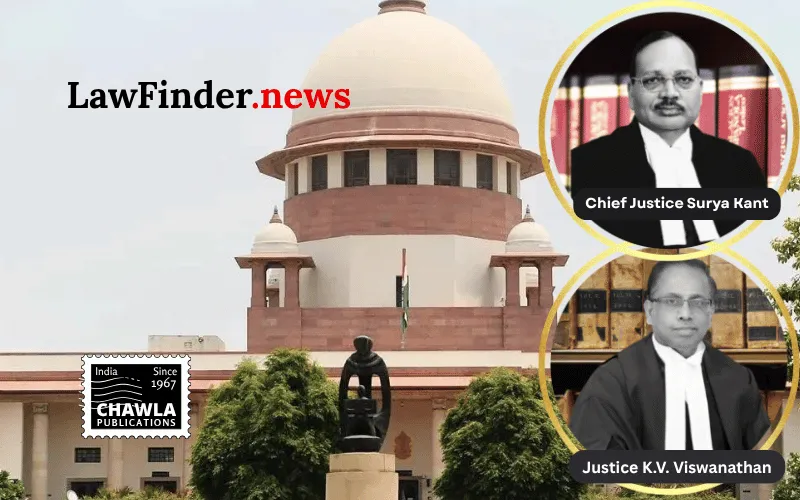
The Lok Adalat benches were presided over by the CJI and comprised other senior judges, judges, senior advocates and advocates-on-record, assisted by senior registrars and other officials of the Supreme Court Registry.
The benches encouraged parties to arrive at settlements voluntarily through dialogue and consensus.
The matters taken up included matrimonial and property disputes, motor accident claims, land acquisition and compensation cases, tax matters, and service and labour disputes.