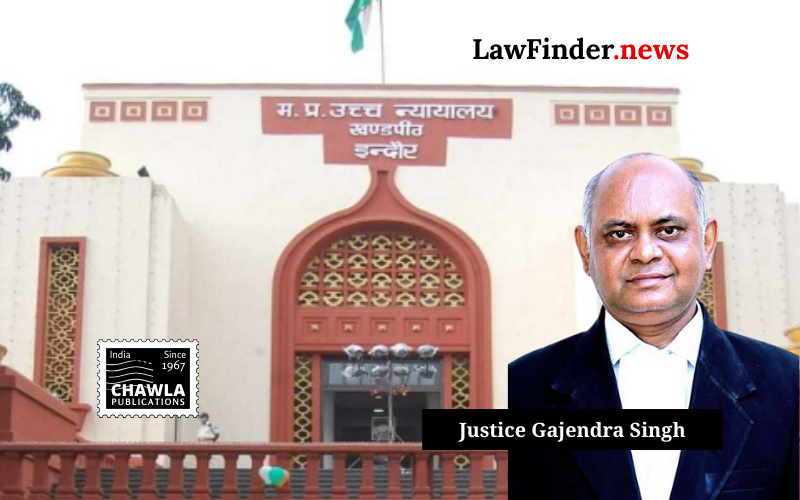
Madhya Pradesh High Court Upholds Framing of Charges Against Deputy Collector in Sexual Misconduct Case. Court dismisses revision petition challenging the framing of charges under IPC Sections 376(2)(N), 376(2)(F), 323, 294, and 506(2) involving abuse of authority and threats
In a significant ruling, the Madhya Pradesh High Court has upheld the decision of the trial court to frame charges against a Deputy Collector accused of sexual misconduct and abuse of authority. The judgment delivered by Justice Gajendra Singh on October 17, 2025, dismissed the revision petition filed by the accused challenging the charges framed under multiple sections of the Indian Penal Code (IPC).
The case emanates from allegations made by a female subordinate, identified as respondent No. 2, who claimed that the Deputy Collector, referred to as the revision petitioner, had sexually assaulted her and exerted pressure using his position of authority. The alleged incidents spanned from April 2016 to December 2023, during which the accused purportedly threatened the victim, coerced her into a non-consensual relationship, and attempted to derail her marriage prospects through intimidation.
The judgment emphasized that the delay in lodging the First Information Report (FIR) in such cases does not undermine the allegations, given the power dynamics and the accused's role as a public servant. The court noted that the prosecutrix was under the revision petitioner's authority as he assured her of quashing FIRs filed by his spouse against her family, thereby manipulating her into submission.
Justice Singh highlighted the scope of judicial power under Section 227 of the Criminal Procedure Code, 1973, and Section 250 of the Bharatiya Nagarik Suraksha Sanhita, 2023, which allows the court to sift through evidence to determine a prima facie case. The judgment referred to precedents set by the Supreme Court in cases like P. Vijayan v. State of Kerala, which delineates the standard of 'grave suspicion' necessary for framing charges.
The defense's argument for discharge based on inferred consent due to a long-standing relationship was dismissed, as the court found the claims of consensual relations unsupported by the factual timeline. The judgment categorically stated that the trial court acted within legal bounds in rejecting the discharge application, emphasizing that the accused's position as a public servant and the unique circumstances warranted the charges.
The court underscored the seriousness of allegations involving sexual misconduct by abuse of authority, which is recognized under IPC Section 376(2) as non-consensual and Section 376C if consensual. The material evidence, including electronic records of conversations and threats, fortified the prosecution's case, leading to the dismissal of the revision petition.
This ruling reinforces the judiciary's stance on addressing abuse of power and protecting victims of sexual misconduct, particularly when the accused holds a position of authority. The judgment serves as a reminder of the legal provisions available to ensure justice in cases of sexual abuse, irrespective of delays in reporting.
Bottom Line:
Framing of charges under Sections 376(2)(N), 376(2)(F), 323, 294, and 506(2) of IPC - Abuse of authority by public servant for sexual misconduct and extending threats - Delay in lodging FIR does not weaken allegations in cases involving abuse of authority and non-consensual sexual intercourse.
Statutory provision(s): Indian Penal Code Sections 376(2)(N), 376(2)(F), 323, 294, 506(2), Criminal Procedure Code Section 227, Bharatiya Nagarik Suraksha Sanhita Section 250
"Y" v. State Of Madhya Pradesh, (Madhya Pradesh)(Indore) : Law Finder Doc Id # 2796512