Bail Granted Due to Weak Evidence and Lack of Corroboration Under 'Last Seen Theory'
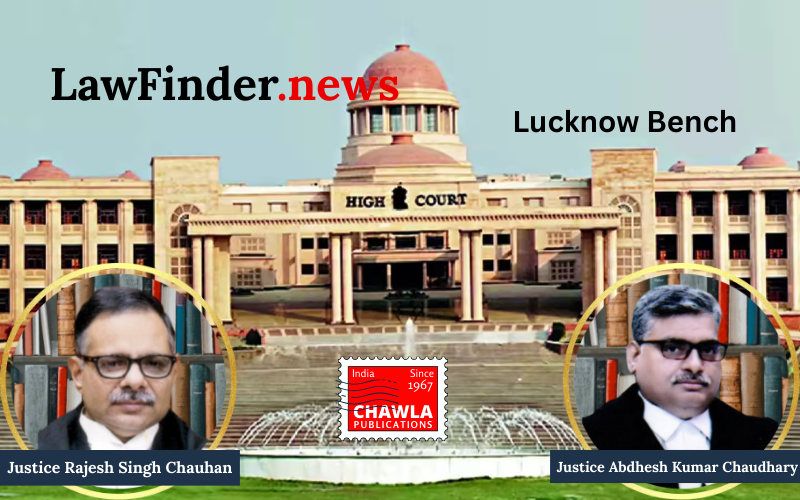
In a significant development, the Allahabad High Court, Lucknow Bench, has granted bail to Rahul Verma, an IIT Kanpur graduate and IIM Lucknow post-graduate, who was convicted of murder under Section 302 of the Indian Penal Code. The decision was made by Justices Rajesh Singh Chauhan and Abdhesh Kumar Chaudhary, who found the prosecution's evidence against Verma to be insufficient and lacking in corroboration.
The case, which has been under scrutiny since 2010, revolves around the alleged murder of Adesh Bajpai, a young fashion designer. The prosecution relied heavily on circumstantial evidence and the 'last seen theory,' which posited that Verma was the last person seen with Bajpai. However, the court noted that the 'last seen theory' is considered a weak form of evidence and requires strong corroborative evidence or proof of motive to sustain a conviction.
The court observed that the prosecution's case was marred by significant infirmities, including the lack of direct eyewitness testimony or medical evidence linking Verma to the crime. The skeletal remains found, which were purportedly those of Bajpai, could not be conclusively identified through DNA analysis. Furthermore, the court highlighted the absence of motive and the reliance on the testimony of a single unreliable witness, Vivek Kumar Trivedi, whose statements were inconsistent and delayed.
While the Central Bureau of Investigation opposed the bail, citing the gravity of the offense, the court emphasized the need for a prima facie assessment of the merits of the appeal. The judges noted that Verma, who has been incarcerated for over 12 years, should not be deprived of his liberty due to the weak evidence presented by the prosecution.
The bail conditions include the deposit of the fine imposed by the trial court, cooperation in the early disposal of the appeal, prohibition on criminal activities, and surrender of Verma's passport. The court made it clear that the bail could be canceled if Verma commits any offense during the bail period.
Rahul Verma's case has attracted attention due to the alleged connection with a community of particular sexual orientation, which the court found to be an unfair basis for suspicion. The final hearing of the appeal is scheduled for December 2025.
Bottom Line:
Circumstantial evidence and 'last seen theory' are insufficient for conviction under Section 302 IPC if they lack corroborative evidence or proof of motive. Bail application allowed due to weak evidence and unsubstantiated prosecution claims.
Statutory provision(s): Indian Penal Code, 1860 Sections 302 and 201; Criminal Procedure Code, 1973 Section 389