Court Upholds Principles of Natural Justice, Orders Reassessment of Moral Turpitude Allegations Against Advocate
In a significant ruling, the Allahabad High Court has quashed the Uttar Pradesh Bar Council's decision to suspend Advocate Sushil Kumar Rawat for ten years over allegations of bigamy, citing violations of natural justice and the subjective nature of moral turpitude. The decision came after Rawat filed a writ petition challenging the suspension, which was imposed without prior notice or opportunity for a hearing.
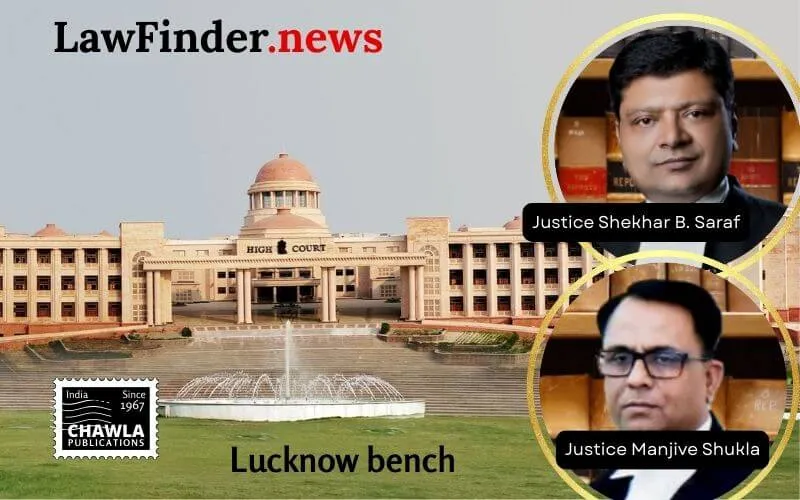
The Division Bench, comprising Justices Shekhar B. Saraf and Manjive Shukla, emphasized that moral turpitude, a term often used in legal and ethical contexts, requires careful examination and is not automatically applicable to the offence of bigamy without a conviction. The court highlighted the subjective nature of moral turpitude, noting that the term encompasses acts that are inherently base, vile, or depraved, and must be assessed on a case-by-case basis.
The High Court criticized the Bar Council's decision-making process, pointing out that the suspension order was passed ex parte without notifying Rawat or allowing him to defend himself. This procedural lapse was deemed a clear violation of the principles of natural justice, which mandate fair treatment and the right to a hearing before imposing such severe penalties.
The judgment referenced multiple precedents, including decisions from the Supreme Court and other high courts, to underscore the necessity of a conviction for moral turpitude to be applicable. The Court noted that while bigamy might be considered under moral turpitude in certain contexts, the lack of a conviction in Rawat's case rendered the suspension premature and legally untenable.
In light of these findings, the High Court has directed the Bar Council to issue a proper notice to Rawat and subsequently pass a reasoned order following due legal procedures within twelve weeks. The court's directive ensures that Rawat receives a fair opportunity to present his case and defend against the allegations.
This ruling not only reinstates Rawat's ability to practice law but also sets a precedent for similar cases, emphasizing the importance of adhering to natural justice and ensuring that disciplinary actions within the legal profession are grounded in substantial evidence and lawful procedures.
Bottom Line:
Advocate's suspension for alleged moral turpitude without proper notice and hearing violates principles of natural justice.
Statutory provision(s): Article 226 of the Constitution of India, Advocates Act, 1961, Bar Council of India Rules.
Sushil Kumar Rawat v. Bar Council of U.P., (Allahabad)(Lucknow)(DB) : Law Finder Doc Id # 2823387