Court emphasizes child welfare over procedural technicalities, allowing writ jurisdiction despite alternate remedies.
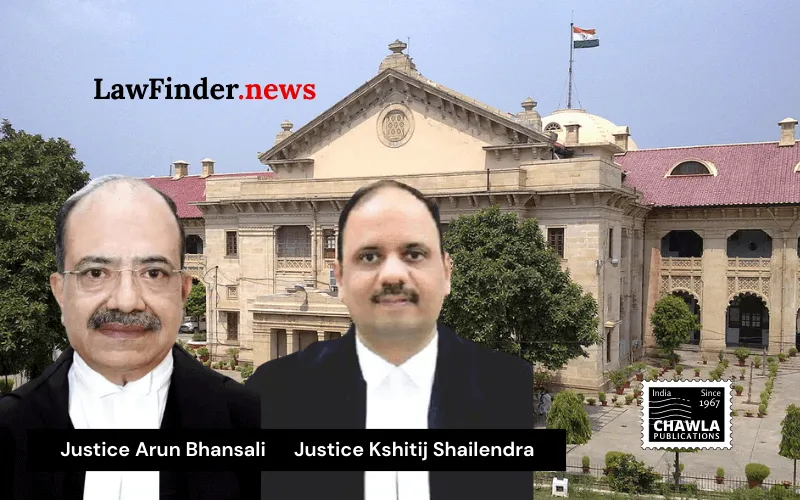
In a significant ruling, the Allahabad High Court has reinstated a habeas corpus petition filed by Smt. Rinku Ram @ Rinku Devi, seeking the custody of her minor son, Vishwajeet, from the child's father amidst matrimonial discord. The Division Bench consisting of Chief Justice Arun Bhansali and Justice Kshitij Shailendra overturned the dismissal of the petition by a Single Judge, emphasizing the paramount importance of the child's welfare over procedural technicalities.
The case centers around a dispute between the appellant, Smt. Rinku Ram, and her estranged husband, a police constable, regarding the custody of their 20-month-old son. The child had been forcibly taken by the father, and despite an order from the Child Welfare Committee (CWC) directing the father to return the child to the mother, compliance was not forthcoming. The Single Judge had previously dismissed the habeas corpus petition on the grounds that the Guardians and Wards Act, 1890, provides an alternative remedy for custody disputes.
However, the Division Bench clarified that the availability of an alternate remedy does not preclude the invocation of the writ jurisdiction, particularly when the welfare of the child is at stake. The judgment referenced the Supreme Court's decisions in Yashita Sahu v. State of Rajasthan and other landmark cases, asserting that the writ of habeas corpus can be maintained even if the child is in the custody of another parent, as the welfare of the child is the paramount consideration.
The court also expressed dissatisfaction with the conduct of the police authorities in handling the CWC's directives, noting that bureaucratic procedures had delayed compliance, leaving the child in police lines contrary to the welfare committee's order. During hearings, the father's counsel suggested the possibility of a mediated settlement of the matrimonial discord, but the mother's counsel stressed the immediate concern of the child's custody due to his tender age.
Ultimately, the High Court ruled that the writ petition should be heard on merits, allowing both parties to present their cases fully, and restored the petition to its original status to be heard anew. This decision underscores the judiciary's commitment to ensuring the welfare of children in custody disputes, prioritizing their best interests over procedural hurdles.
The special appeal was allowed, and the habeas corpus writ petition was ordered to be listed before an appropriate bench on April 16, 2026, providing the appellant another opportunity to argue her case for the custody of her minor son.
Bottom Line:
Writ of habeas corpus for custody of a minor child can be maintained even if the child is in the custody of another parent. The paramount consideration is the welfare of the child, and the availability of an alternate remedy under the Guardians and Wards Act, 1890, does not bar the writ jurisdiction of the court.
Statutory provision(s): Article 226 of the Constitution of India, Guardians and Wards Act, 1890
Smt. Rinku Ram @ Rinku Devi v. State of U.P., (Allahabad)(DB) : Law Finder Doc id # 2879431