Supreme Court Invalidates High Court's Judgment, Upholds Arbitration Agreement in Hindustan Construction Case Apex Court Directs Appointment of Substitute Arbitrator, Criticizes State Entity's Conduct
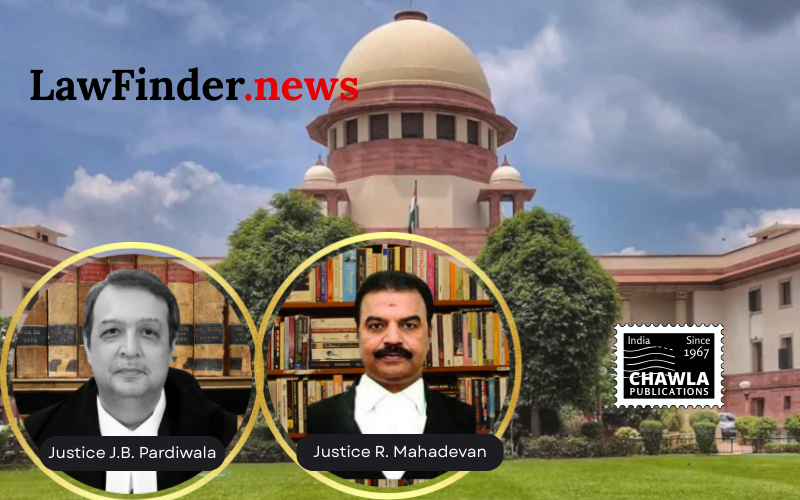
In a landmark judgment delivered on November 28, 2025, the Supreme Court of India set aside the Patna High Court's decision that had dismissed the arbitration proceedings between Hindustan Construction Company Ltd. and Bihar Rajya Pul Nirman Nigam Limited. The Supreme Court, comprising Justices J.B. Pardiwala and R. Mahadevan, ruled that the arbitration agreement contained in Clause 25 of the contract between the parties was valid and enforceable.
The dispute arose from a contract awarded to Hindustan Construction Company for the construction of a bridge over River Sone in Bihar. The contract included an arbitration clause, Clause 25, which stipulated that disputes would be resolved through arbitration appointed by the Managing Director of BRPNNL. However, the High Court had dismissed the ongoing arbitration proceedings, citing a judgment from a similar case, which led to Hindustan Construction Company Ltd. appealing to the Supreme Court.
The Supreme Court emphasized the importance of minimal judicial intervention in arbitration, reaffirming that once an arbitration agreement is established, courts should facilitate rather than obstruct the arbitral process. The judgment clarified that while unilateral appointment clauses might be void, the arbitration agreement itself remains valid under the principle of severability.
Justice Mahadevan, writing for the bench, criticized the High Court's exercise of jurisdiction, stating that it amounted to a disguised appeal and undermined the certainty of judicial orders. The Court also highlighted the conduct of BRPNNL, noting the public sector entity's failure to act on repeated requests for arbitration, which compelled Hindustan Construction to seek judicial intervention.
The Supreme Court directed the Patna High Court to appoint a substitute arbitrator to continue the proceedings from the stage they were interrupted, ensuring that the arbitration is concluded within a year. The judgment serves as a stern reminder to public entities to adhere to their contractual obligations and uphold fairness and transparency in their dealings.
Bottom Line:
Validity of arbitration agreements and unilateral appointment clauses in public-private contracts - Section 12(5) of the Arbitration and Conciliation Act, 1996 imposes mandatory disqualification for arbitrators with certain relationships to the parties, and this disqualification can only be waived through express post-dispute written agreement.
Statutory provision(s): Arbitration and Conciliation Act, 1996 Sections 11(6), 12(5), 15(2), 29A, 4, 7, 16, 18, 34, Indian Contract Act, 1872 Section 31, Section 33
The Supreme Court's decision is expected to have wide implications for public-private contracts, particularly concerning arbitration clauses and the conduct expected from state entities in fulfilling their contractual responsibilities.