Supreme Court Rules No Personal Hearing Required Before Fraud Classification by Banks, Mandates Disclosure of Forensic Audit Reports, Upholding RBI Master Directions, SC balances natural justice principles with practical banking needs, overruling High Courts on personal hearing but affirming right to audit report disclosure
In a significant judgment delivered on April 7, 2026, the Supreme Court of India in the combined appeals of State Bank of India v. Amit Iron Private Limited & Ors. clarified critical aspects of the procedure banks must follow before classifying a borrower’s account as “fraud” under the Reserve Bank of India (RBI) Master Directions on fraud classification.
The case arose out of disputes where borrowers contended they were entitled to a personal/oral hearing before their loan accounts were classified as fraud accounts, a classification carrying severe civil consequences including blacklisting and criminal implications. The High Courts of Calcutta and Delhi had earlier held that personal hearings were mandatory based on the Supreme Court’s 2023 judgment in State Bank of India v. Rajesh Agarwal, which had read principles of natural justice into RBI’s 2016 Master Directions on fraud classification.
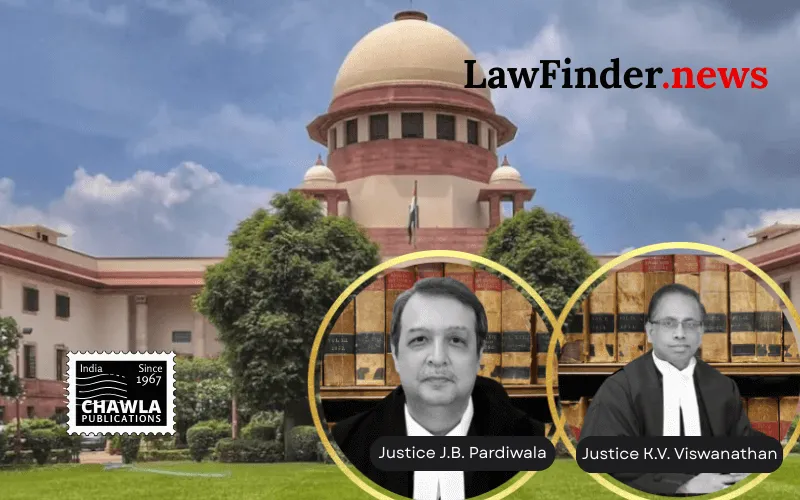
The Supreme Court, however, in a detailed and unanimous judgment by Justices J.B. Pardiwala and K.V. Viswanathan, held that the 2023 Rajesh Agarwal decision did not recognize a right to personal hearing. Instead, the Court emphasized that the procedural fairness requirements under the RBI Master Directions are satisfied by issuing a detailed show cause notice, providing a reasonable opportunity to reply in writing, and passing a reasoned order that takes into account the borrower’s response.
The Court noted that oral or personal hearing is not an inherent right unless expressly provided by law. Given the large volume of fraud cases reported annually (over 23,000 in FY 2024-25 alone involving thousands of crores), mandating personal hearings in each case would cause significant delays and logistical burdens, potentially allowing fraudsters to abscond or dissipate assets, thereby prejudicing public interest and banking stability.
Furthermore, the Court underscored that fraud classification is primarily based on documentary and financial evidence such as forensic audit reports, transaction records, and stock valuations, which are already in the knowledge or possession of the borrower. A personal hearing would convert a swift regulatory and administrative process into a protracted quasi-judicial proceeding, contrary to the regulatory objectives.
Importantly, the Court upheld the borrowers' right to receive copies of the forensic audit reports relied upon by the banks, subject to limited exceptions where disclosure may affect third-party rights. This disclosure ensures transparency and the borrower’s ability to make effective representations, thereby meeting the principles of natural justice.
The Court also clarified that the 2024 RBI Master Directions explicitly incorporate these procedural safeguards, including issuing show cause notices with detailed allegations, allowing at least 21 days for written replies, and mandating reasoned orders. These directions strike a fair balance between prompt fraud detection and fairness to borrowers.
The judgment sets aside the High Courts’ orders mandating personal hearings but upholds their directions on forensic report disclosure. The Supreme Court directed the banks to furnish the forensic audit reports to the borrowers and allow them to submit written representations before passing fresh orders in accordance with the RBI guidelines.
This ruling affirms the regulatory wisdom of RBI and the banking sector’s need for timely fraud detection while safeguarding borrowers’ rights through procedural fairness. It recognizes natural justice as a flexible concept tailored to administrative realities rather than rigid courtroom procedures.
Bottom Line:
Borrowers are not entitled to a personal/oral hearing before the classification of their accounts as "fraud" under the Master Directions issued by the Reserve Bank of India (RBI), provided that principles of natural justice, such as issuance of show cause notice, consideration of reply, and the passing of a reasoned order, are followed.
Statutory provision(s): Banking Regulation Act, 1949 Section 35A; Reserve Bank of India (Frauds Classification and Reporting by Commercial Banks and Select Financial Institutions) Directions, 2016 and 2024
State Bank of India v. Amit Iron Private Limited, (SC) : Law Finder Doc id # 2879070