Madras High Court Denounces Bar Association's Alleged Boycott, Upholds Constitutional Right to Legal Representation Court Transfers Investigation to CB-CID Amid Allegations of Professional Misconduct by Nagercoil Bar Association
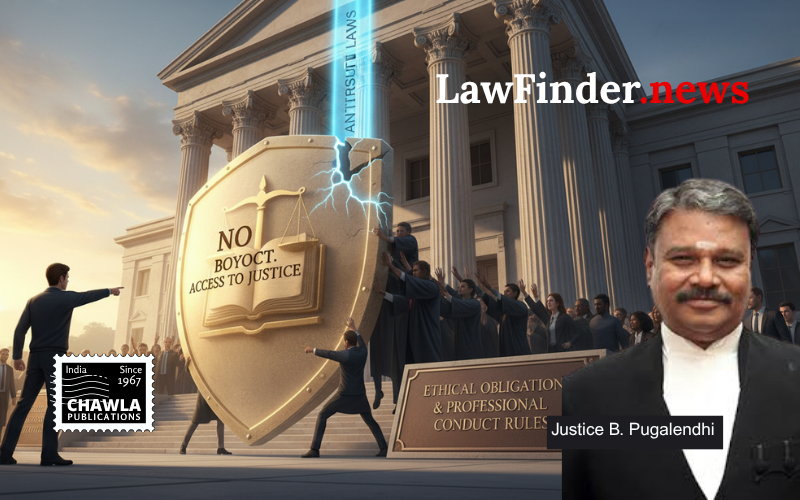
In a landmark judgment, the Madras High Court, Madurai Bench, presided by Justice B. Pugalendhi, strongly condemned the alleged actions of the Nagercoil Bar Association and other local bar associations for purportedly intimidating advocates and preventing legal representation for certain accused individuals. This judgment underscores the constitutional guarantees under Articles 21, 22(1), and 39A of the Indian Constitution, which ensure the right to a fair trial and the right to legal representation.
The court was hearing multiple petitions where allegations were made against members of the Nagercoil Bar Association and other connected bar associations. The crux of the petitions was the denial of effective legal representation to certain accused persons, with claims that informal resolutions were preventing advocates from appearing for the accused. The court highlighted that such conduct by the bar associations violates professional ethics and constitutes gross professional misconduct under the Advocates Act, 1961, and the Bar Council of India Rules.
In a stern order, the court reiterated that the right to legal representation is a constitutional guarantee, and any act by a bar association to prevent an accused from engaging counsel of choice is unconstitutional. The court directed the Principal District and Sessions Judge, Kanyakumari District, to personally monitor the trials to ensure that the accused are provided effective legal representation of their choice without intimidation.
Further, concerning the allegations of police bias and suppression of complaints, the court transferred the investigation of Crime No. 215 of 2025 to the CB-CID, Kanyakumari District, for an independent, comprehensive, and time-bound inquiry. The court also directed the Bar Council of Tamil Nadu and Puducherry to take swift disciplinary action against any advocates found to have participated in or endorsed a boycott of legal representation for the accused.
The judgment serves as a crucial reminder of the legal profession's duty to uphold the dignity and independence of the bar, ensuring that it remains an integral component of the judicial process rather than a tool of intimidation or exclusion.
Bottom Line:
Advocates and Bar Associations cannot collectively boycott or prevent legal representation for accused persons. Such actions violate constitutional guarantees under Articles 21, 22(1), and 39A, and constitute professional misconduct.
Statutory provision(s): Articles 21, 22(1), 39A of the Constitution of India; Advocates Act, 1961, Section 35; Bar Council of India Rules
Manikandan Nair v. State of Tamil Nadu, (Madras)(Madurai Bench) : Law Finder Doc Id # 2804365