Dance Teacher's Attempt to Use Insolvency Proceedings to Escape Maintenance Payment to Estranged Wife Rejected
In a significant judgment, the Bombay High Court has dismissed an insolvency petition filed by Mehul Jagdish Trivedi, a dance teacher from Mumbai, who sought to be declared insolvent to evade a maintenance order issued by the Family Court. The petition was filed under the Presidency-Towns Insolvency Act, 1909, where Trivedi claimed an inability to pay Rs. 25,000 per month as maintenance to his estranged wife, Manisha Mehul Trivedi.
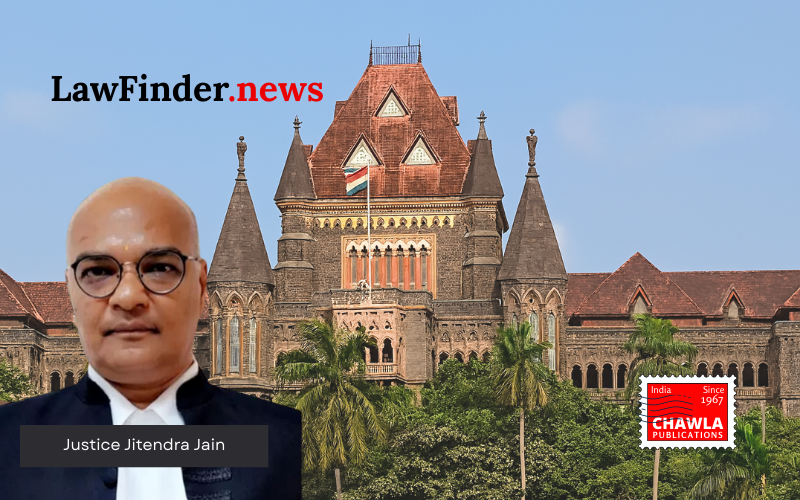
Justice Jitendra Jain, presiding over the case, emphasized that insolvency proceedings cannot be used as a tool to frustrate legal obligations arising from Family Court orders. The judgment reiterates that maintenance liabilities under Section 125 of the Criminal Procedure Code are not considered "debts" under insolvency law.
Trivedi, who argued that his monthly earnings ranged between Rs. 12,000 and Rs. 15,000, claimed insolvency due to the substantial arrears of Rs. 22,30,000 owed under the Family Court's order. However, the court highlighted that merely having debts exceeding Rs. 500 does not automatically qualify a debtor for insolvency status under Section 14(1)(a) of the Presidency-Towns Insolvency Act.
The court further noted that granting such a petition would undermine the Family Court's authority and allow parallel proceedings that could delay justice. Justice Jain underscored the discretionary power of the court in adjudicating insolvency cases, stating that the law intends to provide relief to honest debtors, not to circumvent moral and legal duties such as spousal support.
The judgment also referenced the Mysore High Court ruling in Hemavathiamma v. Kumaravela Mudalia, affirming that maintenance obligations are rooted in the moral duty of a husband and not contractual debts.
The court dismissed the petition, urging parties to consider reconciliation to avoid prolonged litigation and mental distress. This judgment serves as a precedent, highlighting the judiciary's stance against misuse of insolvency laws to avoid familial responsibilities.
Bottom Line:
A debtor cannot be declared insolvent merely because the debts exceed Rs. 500/- under Section 14(1)(a) of the Presidency-Towns Insolvency Act, 1909. The Court retains discretion and evaluates the facts of each case before adjudicating a debtor as insolvent.
Statutory provision(s): Presidency-Towns Insolvency Act, 1909 Sections 14(1)(a), 9(1)(f), 10, 11(a), 45(1)(d); Criminal Procedure Code, 1973 Section 125
Mehul Jagdish Trivedi v. Manisha Mehul Trivedi, (Bombay) : Law Finder Doc Id # 2810960