Court cites safety, congestion, and development constraints; Petitioners advised to make future representation for space allocation
In a significant ruling, the Bombay High Court on March 5, 2026, dismissed a petition filed by the Taxi-Rickshaw OLA-UBER Mens Union seeking allocation of space for prayers during the holy month of Ramzan at Terminal 1 of the Chhatrapati Shivaji Maharaj International Airport. The petitioners had requested the allocation of the same space where a temporary shed, previously used for prayers, was demolished or, alternatively, a new space of at least 1500 sq. ft. for performing religious rituals.
The petitioners' request came after the Mumbai Metropolitan Region Development Authority (MMRDA) demolished the temporary shed in April 2025, deeming it illegal and unauthorized. Despite the demolition, the petitioners approached the court in February 2026, seeking relief on humanitarian grounds.
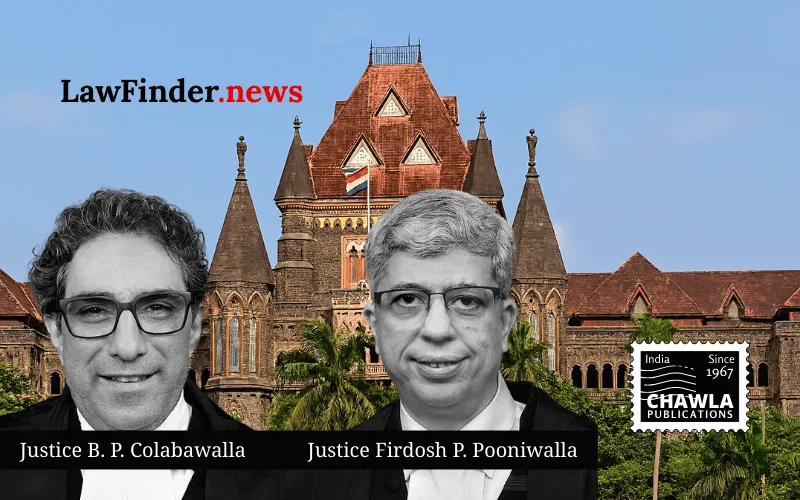
The court, comprising Justices B.P. Colabawalla and Firdosh P. Pooniwalla, considered the petition but ultimately dismissed it after reviewing a comprehensive survey report. This report, prepared by experts including the Senior Inspector of Police and the Chief Security Officer of MIAL, assessed seven potential sites around the airport. It concluded that all proposed sites were unsuitable due to congestion, safety concerns, and conflicts with the Airport Development Plan. The report also highlighted potential security risks associated with permitting prayer activities within Terminal 1's premises.
Acknowledging the expert findings, the judges ruled that they could not mandate the allocation of any space for the petitioners, even temporarily. The court emphasized the importance of safety and security at the international airport, alongside the convenience of passengers.
The bench also noted that a Mosque, or a Madrasa where prayers are offered, is located approximately 1 kilometer from the parking area used by the petitioners' drivers. Given this proximity, the court found no compelling reason to grant the petitioners' request.
However, the court allowed the petitioners to submit a representation to the Mumbai International Airport Limited (MIAL) through the Airport Authority of India for consideration of prayer space in future airport developments. The decision to allocate such space, the court clarified, would lie at the discretion of the relevant authorities, factoring in safety, security, and passenger convenience.
The dismissal of the writ petition also led to the disposal of an associated intervention application. The court's decision underscores the balance between religious accommodation and operational priorities at key infrastructure sites.
Bottom Line:
Petition seeking allocation of space for prayers during Ramzan near Terminal 1 of Chhatrapati Shivaji Maharaj International Airport dismissed due to safety, congestion, and Airport Development Plan constraints. Petitioners may make representation for space allocation in future airport development at the discretion of concerned authorities.
Statutory provision(s): Writ of Mandamus, Administrative Discretion