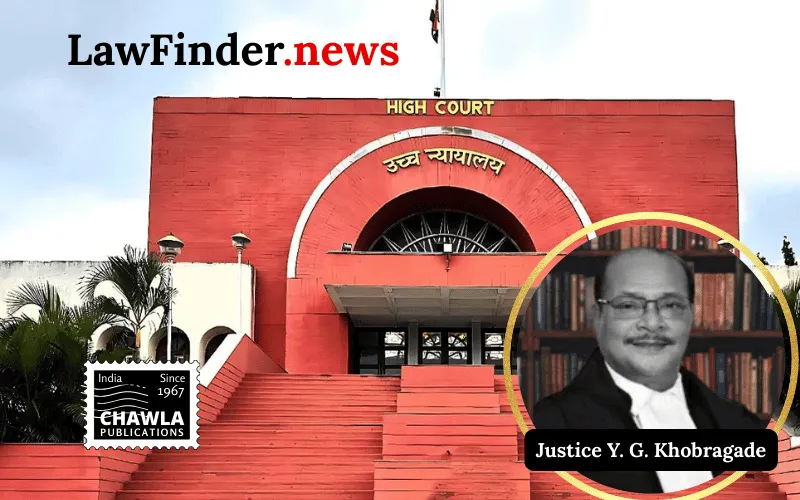
Court Rules Legal Advice Alone Does Not Constitute Criminal Offense Without Direct Involvement
In a significant legal ruling, the Bombay High Court (Aurangabad Bench) has quashed the charges against Sunil Shamsundar Hedda, a legal practitioner, who was implicated in a case involving fraudulent land transactions based on alleged tampering of revenue records. The judgment, delivered by Justice Y. G. Khobragade, emphasized that legal practitioners cannot be held liable for offenses simply due to the provision of legal advice unless there is evidence of their active participation in the conspiracy or fraudulent activities.
The case originated from a complaint filed by a deceased respondent, alleging that agricultural land in Osmanabad was fraudulently sold using falsified documents, with the transactions purportedly conducted under legal advice from Hedda. However, the court found no evidence indicating Hedda's direct involvement in the creation of false revenue records or any active participation in the fraudulent transactions.
The Court scrutinized the inquiry report under Section 202 of the Criminal Procedure Code, which did not reveal any direct involvement of Hedda in preparing false revenue records. The report merely suggested that Hedda provided legal advice, which does not constitute an offense under the Indian Penal Code sections 420, 467, 468, 471, and 166 read with Section 34.
Justice Khobragade highlighted that the orders of impleadment and issuance of process against Hedda, passed by the Trial Court and upheld by the Revisional Court, were unsustainable in law. The judgment referenced precedents from the Supreme Court, including the case of Central Bureau of Investigation, Hyderabad v. K. Narayana Rao, underscoring that liability arises only when an advocate is an active participant in fraudulent activities.
This decision affirms the protection afforded to legal practitioners under the law, ensuring that their professional advice cannot be misconstrued as criminal liability unless supported by substantial evidence of wrongdoing. The court's ruling serves as a reminder of the importance of distinguishing between legal counsel and active criminal involvement in fraud cases.
Bottom Line:
Legal practitioners cannot be made liable for offences merely on the basis of legal advice given, unless it is shown that they actively participated in a conspiracy or plan to commit the alleged offences.
Statutory provision(s): Indian Penal Code, 1860 Sections 420, 467, 468, 471, 166 read with Section 34; Criminal Procedure Code, 1973 Sections 202, 319.
Sunil v. State of Maharashtra, (Bombay)(Aurangabad Bench) : Law Finder Doc id # 2842799