Court Rules Prima Facie Case of Extortion Made Out with Credible Link to Organized Crime Syndicate; Delay and Civil Disputes Do Not Bar Criminal Prosecution
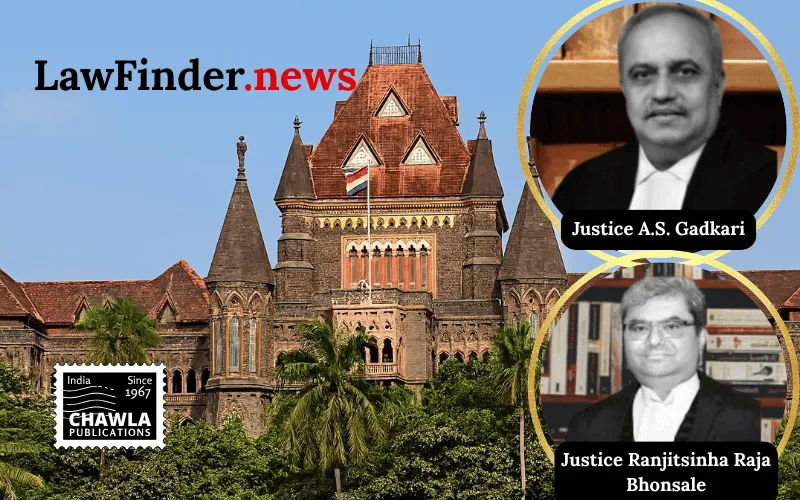
In a significant judgment delivered on June 9, 2026, the Bombay High Court (Division Bench comprising Justices A. S. Gadkari and Ranjitsinha Raja Bhonsale) dismissed writ petitions filed by Rajan Bhagwandas Sujanani and Kishor Vatnani challenging criminal proceedings under the Maharashtra Control of Organised Crime Act (MCOCA), 1999. However, the Court allowed a separate writ petition filed by Mangesh Sawant, quashing the charges and proceedings against him.
The case arises out of a long-standing dispute over development rights and ownership of land measuring over 3,30,000 square feet located at Powai and Bandra, Mumbai. The dispute initially involved civil litigation but escalated when the complainant, Respondent No. 2, alleged that he received extortionate threats via phone calls on September 3 and 4, 2013. The calls were made by gangster Ravi Pujari, who purportedly acted at the behest of Rajan Sujanani, Kishor Vatnani, and others to coerce the complainant into settling the ongoing dispute.
Following the receipt of threatening calls, an FIR was registered in November 2013 under Sections 387 (putting a person in fear of death or grievous hurt in order to commit extortion), 120-B (criminal conspiracy), and 34 (common intention) of the Indian Penal Code. The investigation, initially resulting in an 'A-Summary Report' in 2015 that found insufficient evidence, was reopened after a protest petition in 2017. Subsequent investigations, especially after the extradition of Ravi Pujari in 2020, yielded witness statements and material that formed the basis for invoking MCOCA provisions.
The petitioners contended that the invocation of MCOCA after a nine-year delay was mala fide and without proper application of mind, pointing out contradictions in witness statements and the absence of a Section 65B certificate for electronic evidence until 2022. They argued that the dispute was purely civil and that no extortion case was made out as no property was delivered. Additionally, they challenged the validity of prior approval and sanction required under MCOCA provisions.
The Court, after a detailed analysis of the facts, legal provisions, and precedent judgments, held that:
1. Nexus with Organized Crime Syndicate: There was prima facie credible material linking Rajan Sujanani and Kishor Vatnani with the organized crime syndicate headed by gangster Ravi Pujari. The Court emphasized that invocation of MCOCA requires establishing a nexus either with the syndicate or the offense in the nature of organized crime, which was satisfied here based on witness statements and transcripts of threatening calls.
2. Delay in Invoking MCOCA Not Fatal: The Court observed that the initial complaint and FIR were promptly filed after the threatening calls, and the delay in invoking MCOCA provisions was adequately explained by fear and terror caused by the gangster. The Court rejected the argument that delay alone suffices to quash proceedings.
3. Civil Disputes Do Not Bar Criminal Liability: It was clarified that pendency or outcome of civil litigation over the same property rights does not bar criminal prosecution if prima facie criminal offenses are made out. The Court noted that criminal liability must be examined independently of civil disputes.
4. Validity of Prior Approval and Sanction: The Court held that the prior approval under Section 23(1)(a) and sanction under Section 23(2) of MCOCA need not detail each accused’s individual role at the stage of sanction. The validity of these orders can be tested during trial by leading evidence, and prima facie, the Court found the sanction and prior approval valid with proper application of mind.
5. Electronic Evidence and Section 65B Certificate: The Court followed Supreme Court precedents holding that delayed production of the Section 65B certificate is a curable defect and does not vitiate the evidence or proceedings.
6. Extortion Case Under Section 387 IPC: The Court clarified that for Section 387, delivery of property is not necessary; the process of extortion by putting a person in fear of death or grievous hurt is itself an offense. The transcripts and witness statements showed clear threats from the gangster at the behest of petitioners to settle disputes, making out a prima facie case.
While the Court dismissed the petitions of Rajan Sujanani and Kishor Vatnani, it quashed proceedings against Mangesh Sawant, noting that his name was not implicated in the threatening calls or transcripts and that no credible material linked him to the organized crime syndicate or extortion acts.
The Court also rejected the petitioners’ plea for continuation of interim relief, stating that the trial court will be the appropriate forum to test the evidence, including challenges to sanction, delay, and witness credibility.
This judgment underscores the judiciary’s careful approach in balancing the need to prevent misuse of criminal laws in civil disputes while ensuring that credible allegations of organized crime and extortion are prosecuted. It reiterates the principle that criminal proceedings cannot be quashed merely on delay or pending civil litigation if prima facie offenses are disclosed.
Bottom line:-
Maharashtra Control of Organised Crime Act - Invocation of MCOCA provisions requires credible material showing nexus of accused with organized crime syndicate; mere civil disputes cannot be a ground to quash criminal prosecution if prima facie case of extortion under IPC Section 387 is made out.
Statutory provision(s):
Maharashtra Control of Organised Crime Act, 1999 Sections 2(1)(d), 3(1), 3(2), 3(4), 23(1)(a), 23(2); Indian Penal Code Sections 383, 386, 387, 120-B, 34; Code of Criminal Procedure 1973 Section 482; Evidence Act 1872 Section 65B
Rajan Bhagwandas Sujanani v. State of Maharashtra, (Bombay)(DB) : Law Finder Doc id # 2920575