Court Criticizes Successive Biased Investigations and Orders Transfer to Central Bureau of Investigation to Ensure Justice for Victim’s Widow
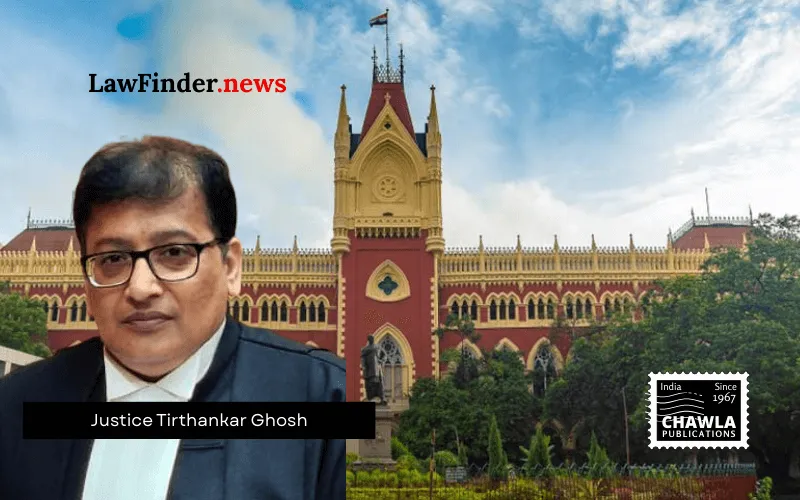
In a landmark judgment dated December 18, 2025, the Calcutta High Court, presided over by Justice Tirthankar Ghosh, ordered the transfer of investigation related to the death of Rabin Ghose, allegedly shot during a police firing incident in Jangipara, West Bengal, to the Central Bureau of Investigation (CBI). The Court’s decision marks a crucial step in a protracted legal battle spanning over 15 years, involving multiple investigations marred by allegations of bias and procedural irregularities.
The writ petition was filed by Latika Ghose, widow of the deceased, seeking a thorough and impartial investigation into the incident of February 14, 2010, when Rabin Ghose was allegedly shot by Tapasbroti Chakraborty, then Officer-in-Charge of Jangipara Police Station. The petitioner raised concerns about the credibility of investigations conducted by local police and CID agencies, citing conflicting expert medical opinions and ignoring of eyewitness testimonies that suggested close-range firing by the accused officer.
The Court noted that the initial investigations were conducted by the immediate superior of the accused, who remained posted at the same station during the probe, raising questions of impartiality. Subsequent investigations by CID and magisterial inquiries relied heavily on contradictory expert opinions about the nature and distance of firing, while disregarding vital eyewitness accounts recorded under Section 164 Cr.P.C. These eyewitnesses consistently testified that the accused officer fired from close range, directly causing the death.
Despite repeated challenges and directions for further inquiry, the final report submitted by the DIG (Special), CID West Bengal in March 2021 exonerated the accused citing lack of conclusive ballistic evidence and inconsistent expert opinions. The magisterial acceptance of this report led to the discharge of the accused, a decision contested by the petitioner for failing to consider ocular evidence and materials indicating possible police culpability.
Justice Ghosh’s judgment critically examined the investigative lacunae, emphasizing the primacy of ocular evidence over conflicting medical opinions as held by the Supreme Court in various precedents including Ghulam Hassan Beigh v. Mohd. Maqbool Magrey (2022) and Abdul Sayeed v. State of M.P. (2010). The Court also underscored the fundamental right to life under Article 21 of the Constitution and the State’s obligation to ensure effective investigation and justice for victims of police excesses.
Highlighting the petitioner’s prolonged struggle for justice and the failure of local investigative agencies to conduct an unbiased probe, the Court exercised its extraordinary jurisdiction under Article 226 of the Constitution. It ordered the immediate transfer of the case records and investigation to the CBI, directing the agency to assign an officer of Additional Superintendent rank to oversee the inquiry. The Court further mandated active monitoring by the CBI Zonal Director to ensure the investigation’s integrity and prompt completion.
The judgment draws upon a comprehensive review of legal principles relating to withdrawal of prosecution (Section 321 Cr.P.C.), the necessity of sanction for prosecution of public servants (Section 197 Cr.P.C.), and compensatory relief for violation of fundamental rights as established in D.K. Basu v. State of W.B. (1997) and subsequent rulings. It reiterates that the Public Prosecutor must act independently and judicial scrutiny is necessary when prosecution withdrawal is sought, especially in cases implicating public servants.
The Court also referred to the principles governing writ jurisdiction under Article 226, stressing that the High Court’s supervisory role includes remedying injustice and ensuring public authorities discharge duties fairly. It rejected the State’s submission that the final report sufficed and that the petitioner should seek remedy before the magistrate, holding that exceptional circumstances justified direct judicial intervention.
The order sets aside the acceptance of the final report by the Learned ACJM, Serampore, and calls for a fresh, impartial investigation. It signals a strong judicial commitment to uphold the rule of law against alleged police misconduct and protect citizens’ constitutional rights.
Bottom Line:
In cases involving alleged police firing causing death, the High Court may order transfer of investigation to an independent agency like CBI if there are serious doubts about the fairness and impartiality of police investigation, especially where ocular evidence contradicts expert opinions.
Statutory provision(s): Article 21 of the Constitution of India, Article 226 of the Constitution of India, Section 154, 156, 157, 164, 169, 170, 173, 197, 304, 321 of the Code of Criminal Procedure, 1973 (Cr.P.C.), Indian Penal Code (IPC)
This news report synthesizes the detailed findings and directions of the Calcutta High Court judgment in Latika Ghose v. State of West Bengal, emphasizing the Court’s insistence on a credible, unbiased investigation by the CBI, the significance of ocular evidence, and the protection of fundamental rights. It presents a clear narrative suitable for public dissemination while respecting the legal complexities and procedural history of the case.
Latika Ghose v. State of West Bengal, (Calcutta) : Law Finder Doc Id # 2823693