Public Prosecutor's Role Criticized; Court Affirms Need for Evidence on Official Duty Allegations
In a significant legal ruling, the Calcutta High Court dismissed a petition by Koustav Bagchi, an advocate and politician, challenging the initiation of defamation proceedings against him. The proceedings were based on remarks he allegedly made about the Chief Minister of West Bengal, which were deemed defamatory and related to her personal life. The case, filed by the Public Prosecutor, relied on Section 222(2) of the Bharatiya Nagarik Suraksha Sanhita, 2023, which allows for prosecution when defamatory statements pertain to a public functionary's conduct in their official capacity.
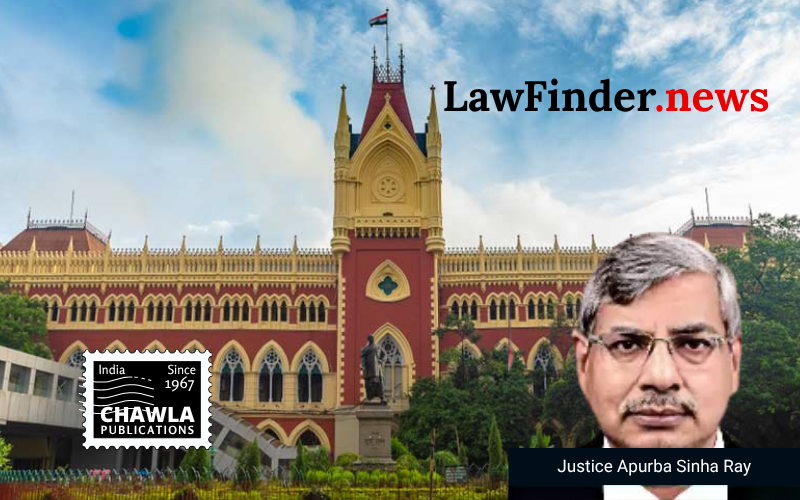
Presiding over the case, Justice Apurba Sinha Ray emphasized that for defamation actions under Section 222(2), the defamatory statements must relate to the discharge of official functions. The judgment highlighted that republication of defamatory content could make the republisher liable akin to the original author, creating new causes of action with each republication.
The court further scrutinized the role of the Public Prosecutor, underscoring that they must independently assess materials before filing a defamation complaint and not act merely on government orders. This aspect of the ruling echoes previous Supreme Court decisions, which stress that Public Prosecutors should not act as rubber stamps for the government but should exercise independent judgment.
Justice Ray pointed out that the allegations involved the Chief Minister's personal life, which typically would not fall under the purview of public functions. However, the case was complicated by allegations of personal conduct intersecting with official duties, such as the presence of an alleged personal acquaintance in the Chief Minister's office. The court noted that such claims require thorough evidence to determine whether they relate to official duties.
The decision also dealt with the contention that the original book containing the defamatory material had not been banned. The court clarified that republication, even if the original material is not banned, remains actionable, stressing the legal duty of the republisher to justify their actions.
In dismissing the petition, the court affirmed the lower court's order to issue summons, indicating that the trial should proceed to examine the evidence thoroughly. The judgment also reaffirmed that the Public Prosecutor's complaint was not barred by law, provided the necessary conditions were met.
The case underscores the delicate balance between freedom of expression and the protection of reputations, especially for public figures, and sets a precedent for how defamation laws are applied in the context of political discourse in India.
Bottom Line:
The prosecution for defamation under Section 222(2) of Bharatiya Nagarik Suraksha Sanhita, 2023, requires the defamatory statement to relate to the conduct of a public functionary in discharge of their public functions - The reproduction of defamatory material can also attract liability akin to the original author, and every republication gives rise to a new cause of action.
Statutory provision(s): Bharatiya Nagarik Suraksha Sanhita, 2023 Sections 222(2), 223, 356(2); Bharatiya Nyaya Sanhita 2023 Section 356(2); Cr.P.C. Section 199(2)
Koustav Bagchi v. State of West Bengal, (Calcutta) : Law Finder Doc Id # 2802276