New Delhi, Feb 6 "This is a new age," the Supreme Court on Friday said as it emphasised the need to balance the rights of freedom of press under Article 19 of the Constitution and an individual's right to dignity, privacy and right to be forgotten under Article 21.
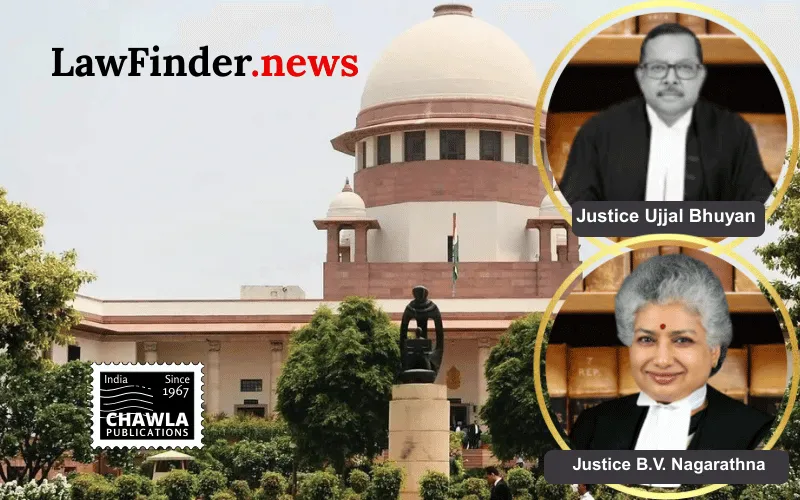
A bench of justices BV Nagarathna and Ujjal Bhuyan agreed to examine a media house's plea challenging an order of Delhi High Court which has upheld an injunction order of a trial court directing restraint on circulation, publication of news concerning an accused, who has been discharged in a criminal case.
The high court on December 18, 2025 had directed media organisations to take down news reports related to the person, while upholding the injunction passed by the trial court in a defamation suit.
The top court issued notice to the person, who has sought direction to be forgotten, and other media organisations and sought their responses by March 16.
The top court also said that the December 18 Delhi High Court order will not be treated as precedent but refused to stay the defamation proceedings.
Senior advocate Arvind Datar, appearing for the media house which had challenged the high court's direction, said the right to be forgotten cannot be applied to online news.
Datar, assisted by advocates Garima Bajaj and Chanan Parwani, urged the court to decide the issue as several high courts like Madras, Rajasthan and Punjab and Haryana have given their opinion on the issue.
Datar submitted that the 2017 KS Puttaswamy case popularly called privacy judgement has said that right to privacy does not include right to erase history.
The bench asked Datar what would happen if the media houses repeat the same news again and again and in conflict which right under Article 19 (1)(a) or Article 21 of the Constitution will prevail.
Datar responded that even in newspapers, a news report, once printed, remains and in case of conflict "right to know will prevail. The news cannot be erased".
He added that even after a person is discharged by the trial court and the discharge order is challenged in the high court, the case is very much alive.
Justice Nagarathna then said how can we reconcile with the right to be forgotten as one cannot be forgotten if it is in news.
Datar said although they have complied with the order and taken down the news item regarding the person in question, any news item online after a certain period goes into the archive.
"We have complied with the directions of the court and taken down the news item. We have even covered the discharge of the person in the criminal case. The problem is if we remove that person's name from a news item, the entire story about the incident also goes," the senior counsel said.
Justice Bhuyan intervened and said, "Nowadays a wall of privacy is being created to deny citizens information. It is not good for democracy."
Datar, while requesting the court to lay down the proposition of law, said that the high court has expanded the scope of the "right to be forgotten" and allowed it to be used as a tool to erase history.
He said several high courts are passing the order while treating the Delhi High Court's order as precedent and they are getting a number of petitions seeking removal of their names from the news item.
He sought stay of the order and said the person wanted the news item to be taken down globally.
"If a court makes adverse remarks. This is news for the media. Now can those reports be taken down simply because the remarks are later set aside?" Datar said, urging the court to clearly define what the right to be forgotten is, and how it can be reconciled with the press freedom.
The counsel appearing for online legal portal 'Indian Kanoon', which was also directed to remove court orders and content by the high court, supported the challenge and flagged the serious implications of directing takedown of judicial records themselves.
Justice Nagarathna said, "This a new age. Now, people will like to be forgotten in the age of social media. There are several defamatory contents being made online. Interesting issue. we will look into it."
Several leading media houses of the country have been made party in the petition.
On July 24, 2024, the top court said removing judgements from public domain by court orders under the right to be forgotten after the acquittal of an accused in criminal cases will have "very serious ramifications".
It had agreed to examine the knotty question of law as to whether an accused, after being absolved in a criminal case, can seek removal of the judgement from the public domain, including digital platforms, in exercise of their right to be forgotten.
The issue has been pending before the apex court.