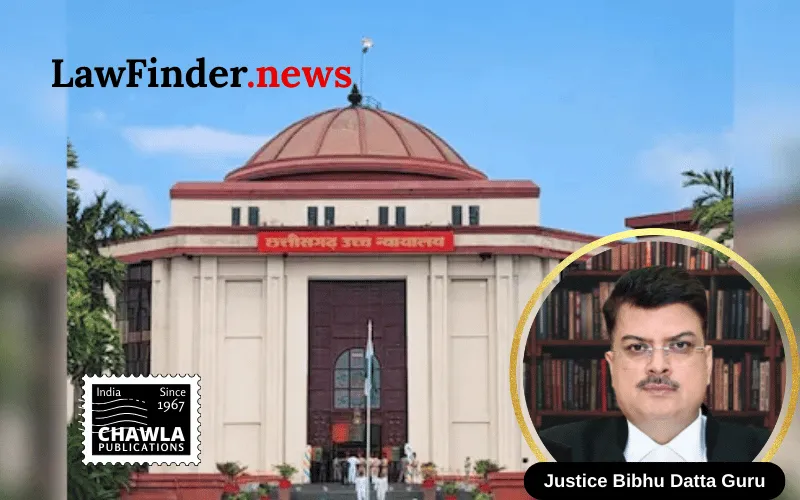
Court Rules Contempt Proceedings Must Target Individual Officers, Not Statutory Authorities
The Chhattisgarh High Court has dismissed a contempt petition filed against the National Highways Authority of India (NHAI), emphasizing that such proceedings must be directed against individual officers rather than statutory authorities. The decision, delivered by Justice Bibhu Datta Guru on June 19, 2026, clarified the nature of contempt proceedings as being quasi-criminal and in personam, meaning they are directed towards specific individuals rather than entities or bodies corporate.
The case, titled "Arvind Kumar Goyal v. National Highways Authority of India," arose from allegations that the NHAI defied a court order dated October 8, 2024, which mandated the redressal of grievances within a 90-day period. The petitioner, Arvind Kumar Goyal, had named NHAI as a respondent, arguing that the authority should be held accountable under Section 12(5) of the Contempt of Courts Act, 1971.
However, the court underscored that contempt proceedings target the individuals responsible for the compliance of court orders. It cited past judgments to affirm that a juristic entity like NHAI cannot be prosecuted for contempt. The court emphasized the necessity of identifying and charging specific officers who allegedly committed the act of defiance.
In dismissing the petition, the court granted liberty to the petitioner to file a fresh contempt petition naming only the individuals directly responsible for the alleged non-compliance. This decision reinforces the legal principle that contempt jurisdiction is aimed at individuals who, by neglect or deliberate act, fail to adhere to court directives.
Bottom line:-
Contempt proceedings are proceedings in personam and cannot be maintained against a statutory authority or juristic entity like National Highways Authority of India (NHAI).
Statutory provision(s): Contempt of Courts Act, 1971 Section 12(5), High Court of Chhattisgarh (Contempt of Court Proceedings) Rules, 2007 Rule 349