Court Upholds Independence of Investigation, Rejects Demands for Coercive Action Against Alleged Offender
In a significant ruling, the Chhattisgarh High Court has dismissed a writ petition filed by Amit Agrawal, seeking judicial intervention in ongoing investigations against Amit Baghel for alleged hate speech. The court emphasized the importance of maintaining the independence of investigative agencies and reiterated that courts should not interfere unless there is clear evidence of mala fides or failure of the investigating machinery.
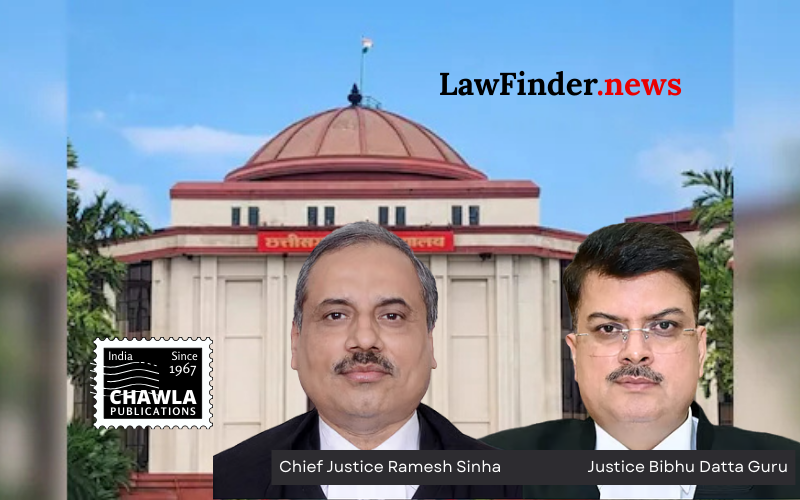
The Division Bench, comprising Chief Justice Ramesh Sinha and Justice Bibhu Datta Guru, delivered the judgment on November 21, 2025. The petitioner, appearing in person, argued that despite multiple FIRs against Baghel, the State's inaction violated constitutional rights and Supreme Court guidelines. Agrawal sought immediate arrest and comprehensive supervision of the investigation by senior police officers.
The State, represented by Deputy Government Advocate Shaleen Singh Baghel, contended that FIRs had been registered and investigations were ongoing. The State opposed the petition as premature, arguing that the petitioner sought to dictate the investigation's course, which is impermissible.
The court, after reviewing submissions and material evidence, found no justification for judicial intervention. It noted that the investigation was active and no arbitrariness or deliberate inaction by the State had been demonstrated.
The judgment referenced Supreme Court guidelines from Tehseen S. Poonawalla v. Union of India and Shaheen Abdulla v. Union of India, which require FIR registration and fair investigations but do not mandate automatic arrests. The court emphasized that judicial supervision would encroach upon investigative discretion and violate established legal principles.
The court dismissed the petition, upholding the independence of the investigative process under the Bhartiya Nagarik Suraksha Sanhita, 2023.
Bottom Line:
Hate speech - Judicial interference in ongoing investigations is impermissible unless there is clear evidence of mala fides, deliberate inaction, or a complete failure of the investigating machinery.
Statutory provision(s): Article 226 of the Constitution of India, Sections 153A, 153B, 295A, and 505 IPC, Bhartiya Nagarik Suraksha Sanhita, 2023.
Amit Agrawal v. State of Chhattisgarh, (Chhattisgarh)(DB) : Law Finder Doc Id # 2812460