Court Criticizes Lack of Appeal Against Acquittal on Charges of Sexual Assault and Abduction of Minor
In a significant ruling, the Chhattisgarh High Court has upheld the conviction of Jawahar Chandra for murder and destruction of evidence, relying heavily on circumstantial evidence. The judgment underscores the court's commitment to holding perpetrators accountable despite challenges in gathering direct evidence. However, the court expressed concern over the lack of appeal against the trial court's acquittal of Chandra on severe charges including abduction and sexual assault under the Indian Penal Code and the Protection of Children from Sexual Offences (POCSO) Act.
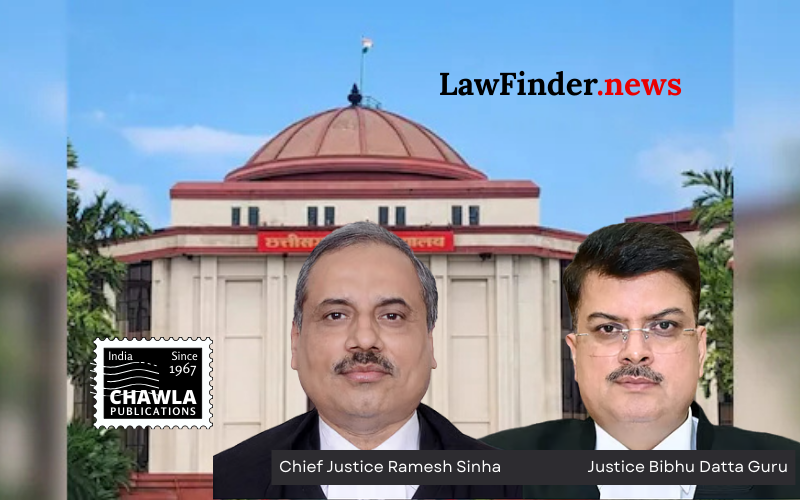
The division bench, comprising Chief Justice Shri Ramesh Sinha and Justice Bibhu Datta Guru, delivered the verdict on November 6, 2025. The bench noted the prosecution's success in establishing a complete chain of circumstantial evidence pointing unerringly toward Chandra's guilt in the murder of a minor girl. The evidence included medical reports, testimonies, and the recovery of incriminating articles.
The case revolved around the tragic events of February 2022, wherein the accused allegedly abducted, sexually assaulted, and murdered the minor victim. Despite the trial court's conviction for murder under Sections 302 and 201 of the IPC, it acquitted Chandra of charges under Sections 363, 364, and 376(3) IPC, as well as Sections 4 and 6 of the POCSO Act, despite overwhelming evidence. The High Court criticized this acquittal, highlighting a misappreciation of evidence regarding the sexual assault and abduction.
The defense argued that the conviction rested solely on circumstantial evidence and pointed out inconsistencies between the postmortem and forensic reports. They contended that the prosecution failed to establish a complete chain of circumstances, arguing procedural lapses and unreliable witness testimonies. However, the High Court dismissed these arguments, affirming the trial court's findings based on the cohesive circumstantial evidence presented.
The judgment also spotlighted the prosecution's failure to challenge the trial court's acquittal on the serious charges of abduction and sexual assault. The court lamented the absence of a State appeal, which it deemed necessary given the gravity of the offense and the compelling evidence of sexual assault.
Despite the trial court's oversight in acquitting the accused of sexual assault charges, the High Court upheld Chandra's conviction for murder and destruction of evidence, sentencing him to life imprisonment. The court directed that Chandra remains in jail to serve out his sentence, noting his incarceration since March 2022.
The judgment serves as a stark reminder of the judiciary's role in ensuring justice, particularly in cases involving minors, and calls for more robust prosecutorial challenges to acquittals in serious offenses. The court's emphasis on the circumstantial evidence underscores its crucial role in securing convictions in cases lacking direct eyewitness accounts.
Bottom Line:
Conviction based on circumstantial evidence for offences under Sections 302 and 201 IPC upheld, while prosecution's inability to challenge acquittal under Sections 363, 364, 376(3) IPC and Sections 4 and 6 of POCSO Act noted.
Statutory provision(s): Indian Penal Code Sections 302, 201, 363, 364, 376(3), Protection of Children from Sexual Offences Act Sections 4, 6, Indian Evidence Act Section 27, Code of Criminal Procedure Sections 313, 374(2), 162, 228A
Jawahar Chandra v. State of Chhattisgarh, (Chhattisgarh)(DB) : Law Finder Doc Id # 2805323