Court Affirms Hoardings Installed to Protect Tribal Culture Are Constitutional, Provides Clarity on Religious Propagation Limits
In a landmark judgment delivered on October 28, 2025, the Chhattisgarh High Court upheld the actions of Gram Sabhas in installing hoardings aimed at preventing illegal religious conversions in tribal areas. The court ruled that these measures are constitutional and within the powers conferred by the Panchayat (Extension to Scheduled Areas) Act, 1996 (PESA Act).
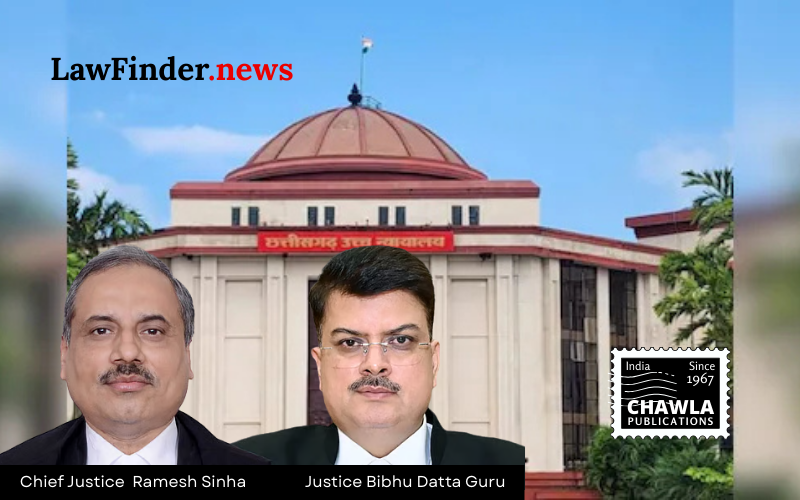
The division bench, comprising Chief Justice Ramesh Sinha and Justice Bibhu Datta Guru, addressed petitions filed by individuals challenging the constitutionality of hoardings that restrict the entry of Christian pastors and converted individuals into certain villages in the Kanker District. The petitioners argued that these hoardings violated their fundamental rights under Articles 19 and 25 of the Constitution, which guarantee freedom of movement and freedom of religion, respectively.
In its detailed judgment, the court clarified the scope of the right to propagate religion under Article 25, emphasizing that it does not include the right to convert others by inducement, force, or fraudulent means. The court referenced the Supreme Court's decision in Rev. Stanislaus v. State of Madhya Pradesh, which upheld the validity of anti-conversion laws, reiterating that the right to "propagate" one's religion does not extend to converting others.
The court recognized the Gram Sabhas' authority under the PESA Act to safeguard tribal culture and heritage, which includes taking preventive measures against illegal conversions. The hoardings, the court noted, serve as a precautionary measure to protect indigenous tribal identity and are not unconstitutional.
Furthermore, the court directed petitioners to avail statutory remedies under the Chhattisgarh Panchayat Upbandh (Anusuchit Kshetron par Vistar) Niyam, 2022, before approaching the High Court. It advised them to file grievances with the Gram Sabha and, if unresolved, appeal to the Sub-Divisional Officer (Revenue).
The judgment has significant implications for the protection of tribal rights and cultural heritage in India, balancing the freedom of religion with the need to prevent social disharmony and preserve indigenous identities.
Bottom Line:
Interpretation of Article 25 of the Constitution of India regarding the right to propagate religion and its limits - The court clarified that the right to propagate does not include the right to convert others through inducement, force, or fraudulent means. The hoardings installed by Gram Sabhas under the PESA Act were considered constitutional as they aimed at preventing illegal conversions and protecting tribal culture and heritage.
Statutory provision(s): Article 25 of the Constitution of India, Article 19 of the Constitution of India, Article 21 of the Constitution of India, Panchayat (Extension to Scheduled Areas) Act, 1996, Chhattisgarh Panchayat Upbandh (Anusuchit Kshetron par Vistar) Niyam, 2022, Madhya Pradesh Dharma Swatantrya Adhiniyam, 1968
Digbal Tandi v. State of Chhattisgarh, (Chhattisgarh)(DB) : Law Finder Doc Id # 2802280