Karnataka High Court Allows Overseas Complainant to Record Evidence via Video Conferencing. Court Relaxes Video Conferencing Rules, Permits Evidence Recording from U.S. Residence with Safeguards
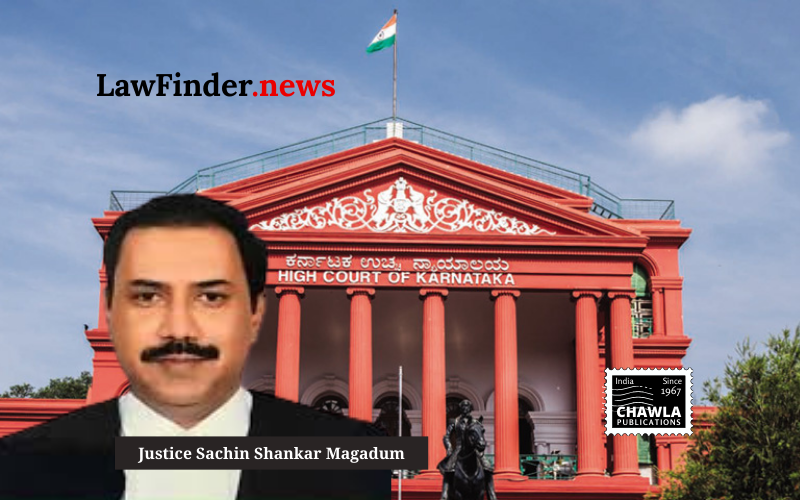
In a significant ruling, the Karnataka High Court has granted relief to a complainant residing in the United States by allowing her to record her examination-in-chief and cross-examination through video conferencing directly from her residence. This decision, delivered by Justice Sachin Shankar Magadum, relaxes the stringent requirements of the Video Conferencing Rules, 2020, particularly Rule 5.3.1, which mandates routing the process through the Indian Embassy or Consulate.
The petitioner, Richa Mishra, initiated criminal proceedings against her husband under various sections of the Indian Penal Code and the Information Technology Act, 2000, alleging serious offenses including domestic violence and privacy breaches. Given her current residence in the U.S. and the time zone differences that impede coordination with the Indian Embassy, Mishra sought the court's intervention to ease procedural burdens.
Her counsel argued that as the complainant, Mishra should not be subject to the same procedural rigour as an accused or a formal witness, especially when practical difficulties arise due to international time differences. The court, acknowledging these challenges, agreed to relax the rules, emphasizing that the procedural framework should not obstruct justice.
The High Court invoked Rule 18 of the Video Conferencing Rules, which empowers it to relax any rule causing undue hardship. Justice Magadum highlighted the need for judicial discretion to ensure that procedural requirements do not hinder the effective dispensation of justice.
Respondent No. 2, Mishra's husband, had opposed the petition, citing concerns about potential disruptions during cross-examination if conducted virtually. However, the court addressed these apprehensions by requiring Mishra to file an undertaking ensuring uninterrupted proceedings, with the condition that any disconnection attributable to her would result in her evidence being discarded.
This ruling reflects a judicial approach that prioritizes access to justice and adapts to the realities of globalized living arrangements. It mandates specific safeguards to maintain the integrity of the judicial process while accommodating the needs of individuals residing abroad.
Bottom Line:
High Court exercised its discretionary power under Rule 18 of Video Conferencing Rules, 2020, allowing the complainant residing abroad to record evidence through video conferencing from her residence without the mandatory requirement of routing the process through the Indian Embassy or Consulate, subject to specific safeguards.
Statutory provision(s): Rule 5.1 of Video Conferencing Rules, 2020, Rule 5.3.1 of Video Conferencing Rules, 2020, Rule 18 of Video Conferencing Rules, 2020, Sections 498A, 377, and 34 of the Indian Penal Code, Sections 66E and 67 of the Information Technology Act, 2000
Richa Mishra v. State of Karnataka, (Karnataka) : Law Finder Doc id # 2802263