Supreme Court Dismisses Meenakshi Natarajan's Petition Against Rejection of Nomination Paper, Supreme Court Upholds the Bar on Judicial Intervention in Electoral Disputes, Emphasizing Post-Election Petitions as the Correct Remedy
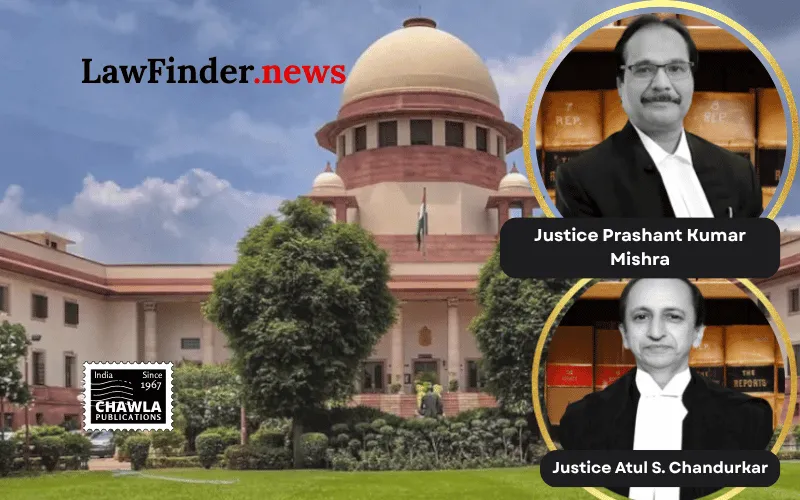
In a significant ruling, the Supreme Court of India has dismissed the writ petition filed by Meenakshi Natarajan challenging the rejection of her nomination papers for the Rajya Sabha elections in Madhya Pradesh. The decision, delivered by a bench comprising Justices Prashant Kumar Mishra and Atul S. Chandurkar, underscores the constitutional mandate that disputes concerning the rejection of nomination papers should not be entertained by the courts during the election process.
The crux of the case rested on Article 329(b) of the Constitution, which bars judicial intervention in electoral matters during the election process. The petitioner, Meenakshi Natarajan, argued that her nomination was unjustly rejected by the Returning Officer due to an alleged non-disclosure of a pending criminal case in her affidavit. However, the Court held that the proper recourse for such grievances is through an election petition post-election, as envisaged by the Representation of the People Act, 1951.
Dr. Abhishek Manu Singhvi, representing the petitioner, contended that the rejection was arbitrary as the pending case did not meet the disclosure criteria under Section 33A of the 1951 Act, given that charges were yet to be framed. Despite these arguments, the Court maintained its stance on the established principle of non-interference during the election process to ensure its smooth and uninterrupted completion.
The respondents, represented by Senior Advocates Mukul Rohatgi and Dama Seshadri Naidu, along with Solicitor General Tushar Mehta, firmly opposed the petition, emphasizing the statutory nature of election rights and the necessity of adhering to the constitutional framework which reserves such disputes for post-election adjudication.
Referring to precedents set in landmark cases such as N.P. Ponnuswami v. Returning Officer and others, the Court reiterated that the legislative intent and judicial interpretation have consistently barred courts from intervening in electoral processes, highlighting the need for all election-related grievances to be addressed through election petitions after the conclusion of the election.
The decision reinforces the Supreme Court's commitment to upholding the sanctity of the electoral process by adhering to constitutional provisions and ensuring that disputes are resolved in the manner prescribed by law.
Bottom Line:
Article 329(b) of the Constitution of India bars the jurisdiction of courts, including the Supreme Court under Article 32, to entertain disputes concerning rejection of nomination papers during the election process. Such disputes can only be addressed through election petitions after the conclusion of elections.
Statutory provision(s): Article 329(b) of the Constitution of India, Section 33A of the Representation of the People Act, 1951
Meenakshi Natarajan v. Election Commission Of India, (SC) : Law Finder Doc id # 2924081