Court emphasizes liberal approach towards amendments to ensure proper adjudication, but restricts introduction of undisclosed documents without due process
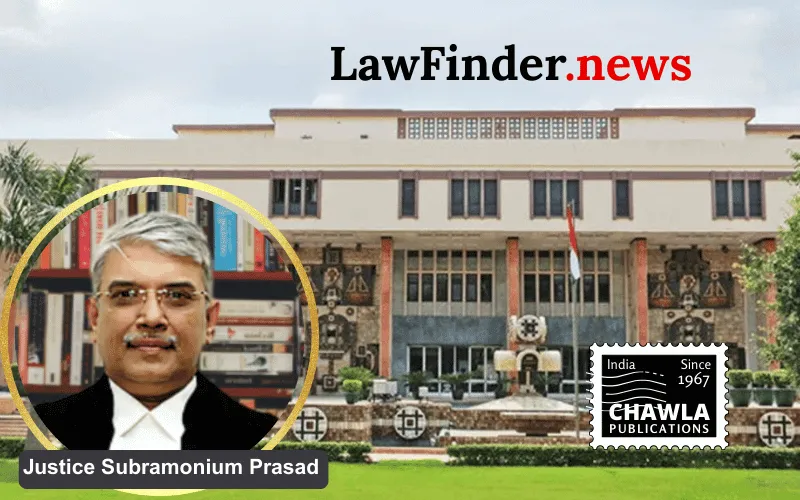
The Delhi High Court, presided over by Justice Subramonium Prasad, has rendered a significant judgment in the commercial litigation between M/s Aerocomfort Anushka JV and M/s Krypton Height Builders & Infrastructure. On January 23, 2026, the court allowed amendments to the written statement filed by the defendants, emphasizing a liberal approach towards such amendments to facilitate the adjudication of the real controversies involved in the suit.
The suit, a complex commercial dispute, revolves around the recovery of substantial sums of money claimed by both parties. M/s Aerocomfort Anushka JV, the plaintiff, is seeking recovery of Rs. 2,08,74,475, while the defendants have a counter-suit claiming Rs. 3,17,10,185 based on dishonored cheques. The contentious issues between the parties pertain to the execution of a subcontract related to a Northern Railways project and subsequent financial transactions.
In the latest proceedings, the defendants sought to amend their written statement to include additional facts and documents that were previously omitted. These facts were crucial to establishing the defendants' claims and defense, including references to a Memorandum of Understanding and communications between the parties. The defendants argued that these amendments were necessary to reflect the true nature of the financial transactions and agreements between the parties.
Justice Prasad held that courts should adopt a liberal stance when it comes to amendments, particularly at the initial stages of litigation, unless such amendments introduce a time-barred claim or significantly alter the nature of the suit. The court referred to several precedents from the Supreme Court of India, which underscore the importance of allowing amendments that do not prejudice the opposite party and are necessary to resolve the controversy.
However, the court drew a line regarding the introduction of documents not disclosed with the original written statement. Citing Order XI Rule 1 Sub-Rules (7) and (10) of the CPC, Justice Prasad clarified that defendants could not rely on undisclosed documents without obtaining prior leave of the court. This ensures that the procedural integrity of the litigation process is maintained and prevents undue prejudice to the plaintiff.
The judgment reflects a balanced approach, promoting the fair adjudication of disputes while safeguarding procedural rights. The court's decision to permit the amendment but restrict the introduction of undisclosed documents without due process serves to uphold both the flexibility and integrity of judicial proceedings.
The case is scheduled to continue on January 28, 2026, where further arguments and submissions will be heard. This development marks a pivotal moment in the litigation, potentially influencing the strategies of both parties as they prepare for the next phase of the trial.
Bottom Line:
Amendment of written statement under Order VI Rule 17 CPC - Liberal approach required, particularly at an early stage of the suit, unless amendment introduces a time-barred claim or alters the nature of the suit.
Statutory provision(s): Order VI Rule 17 of the Civil Procedure Code, 1908, Order XI Rule 1 Sub-Rules (7) and (10) of the Commercial Courts Act.