Court Allows Inquiry to Continue on Select Charges, Revokes Suspension Order, and Orders Consequential Benefits
In a landmark judgment delivered on May 29, 2026, the Delhi High Court has ruled that the Council for Leather Exports (CLE) qualifies as "State" under Article 12 of the Indian Constitution, thereby making it amenable to writ jurisdiction. The decision came in response to a writ petition filed by Ali Ahmad Khan, challenging disciplinary proceedings initiated by CLE against him, as well as his suspension order.
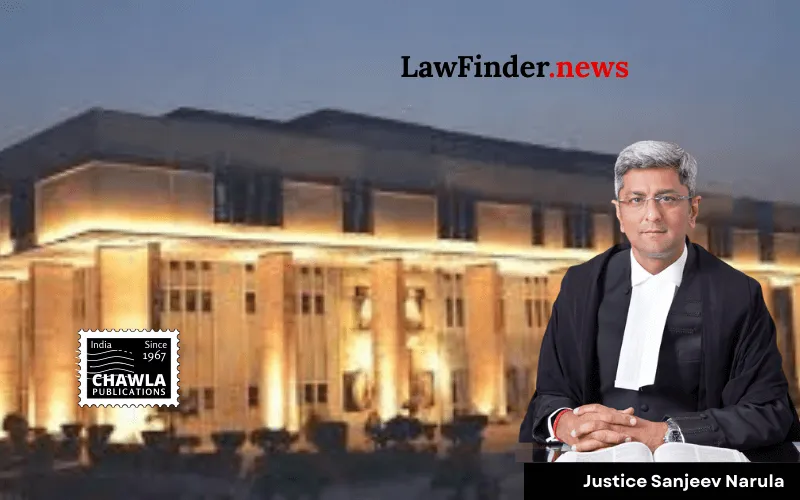
Justice Sanjeev Narula presided over the case, wherein the petitioner sought the quashing of a charge-sheet dated March 1, 2019, and the suspension order dated April 15, 2019. The petitioner, Ali Ahmad Khan, had previously served as the Secretary of the Central Waqf Council and was repatriated from his deputation at the National Book Trust (NBT). CLE contested the petition on the grounds of non-maintainability, arguing that it was not "State" under Article 12 and hence not subject to writ jurisdiction.
The judgment meticulously analyzed the institutional character and functions of CLE, concluding that despite being a company limited by guarantee under the Companies Act, 1956, its role as the recognized Export Promotion Council for leather exports under the foreign trade regime imbues it with a public character. The court referenced the Madras High Court's earlier ruling, which had similarly recognized CLE as an instrumentality of the Central Government.
On the merits of the disciplinary proceedings, the court differentiated between the articles of charges. It allowed the inquiry to proceed on Articles I to V concerning Khan's tenure at the Central Waqf Council but quashed Articles VI and VII, which accused Khan of failing to join CLE post-repatriation and alleged discourteous conduct. The court found these charges inconsistent with CLE's earlier stance before the court and its treatment of salary payment as joining.
Furthermore, the suspension order was set aside due to its lack of a substantive assessment of necessity and its punitive effect. The court ordered CLE to compute and release differential salary and allowances for the period during which Khan was under suspension, subject to the final outcome of the inquiry.
The ruling provides critical insights into the application of constitutional law to Export Promotion Councils and establishes precedents for assessing their status under Article 12. It underscores the judiciary's role in ensuring that bodies performing public duties are subject to legal scrutiny, thereby upholding principles of fairness and accountability.
Bottom line:-
Export Promotion Council functioning under the administrative aegis of the Government of India can be considered "State" under Article 12 of the Constitution, making it amenable to writ jurisdiction.
Statutory provision(s): Article 12, Article 226, Waqf Act, 1995
Ali Ahmad Khan v. Council For Leather Exports, (Delhi) : Law Finder Doc id # 2913027