Cruelty Established by Cumulative Abusive Conduct; Allegations of Dowry Harassment Unsubstantiated
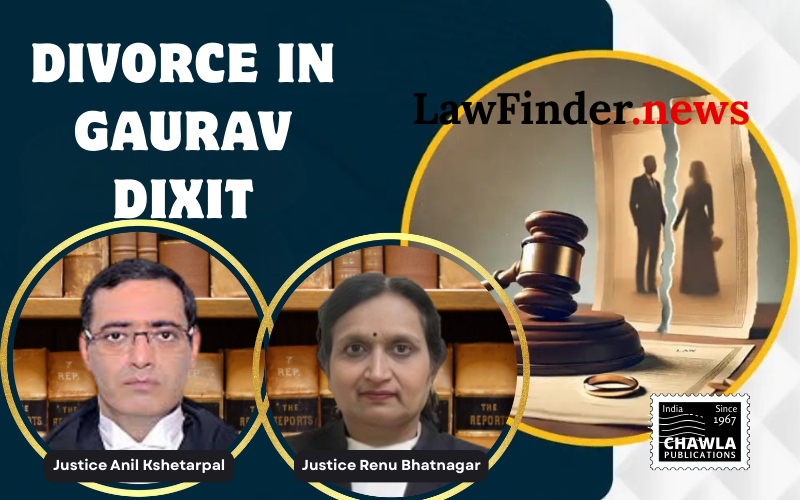
In a significant ruling, the Delhi High Court has allowed the appeal of Gaurav Dixit, granting him a divorce on the grounds of cruelty as defined under Section 13(1)(ia) of the Hindu Marriage Act, 1955. The judgment, pronounced by Justices Anil Kshetarpal and Renu Bhatnagar, overturns the earlier decision of the Family Court, which had dismissed Dixit's petition for divorce.
The court found that the cumulative abusive conduct of the Respondent, Priyanka Sharma, including verbal insults, threats of suicide, withdrawal from cohabitation, and desertion without reasonable cause, amounted to cruelty. The judgment emphasized the importance of considering the overall pattern of behavior rather than isolated incidents, aligning with precedents set by the Supreme Court in cases such as Samar Ghosh v. Jaya Ghosh and K. Srinivas Rao v. D.A. Deepa.
Dixit had approached the court seeking a divorce, alleging mental cruelty due to a series of acts by Sharma. These included her expression of unwillingness in the marriage, demands for living arrangements separate from Dixit's parents, and threats of implicating him in false criminal cases. Despite Sharma's counter-allegations of dowry demands and harassment, the High Court noted the lack of contemporaneous evidence supporting these claims.
The High Court also addressed the principle of "clean hands," clarifying that this does not bar relief when the petitioner establishes a statutory ground for divorce. The allegations against Dixit were deemed unsubstantiated, with no substantial evidence provided by Sharma to prove dowry-related misconduct.
Furthermore, the court acknowledged the irretrievable breakdown of marriage, exacerbated by allegations of sexual impropriety against Dixit's relatives, which destroyed the possibility of reconciliation. The absence of a child and prolonged separation since January 2020 further supported the conclusion that the marriage had irreparably broken down.
In its judgment, the court dissolved the marriage solemnized on March 1, 2016, under the Hindu Marriage Act, recognizing the need to prevent continued bitterness and mental agony. The decision reflects the judiciary's commitment to uphold individual dignity and mental peace in matrimonial disputes.
The court urged both parties to maintain civility in any future interactions, particularly concerning pending or future proceedings related to maintenance or ancillary reliefs. The appeal was disposed of with the direction to the Registry to draw up the Decree Sheet accordingly.
Bottom Line:
Divorce under Section 13(1)(ia) of Hindu Marriage Act, 1955 - Cruelty established based on cumulative abusive conduct, threats, withdrawal from cohabitation, and desertion - Allegations of dowry harassment and misconduct unsubstantiated - Irretrievable breakdown of marriage recognized.
Statutory provision(s):
- - Hindu Marriage Act, 1955 Section 13(1)(ia) - Cruelty
- - Hindu Marriage Act, 1955 Section 23(1)(a) - Clean Hands Principle
- - Code of Criminal Procedure, 1973 Section 125
Gaurav Dixit v. Priyanka Sharma, (Delhi)(DB) : Law Finder Doc Id # 2811210