Court Enhances EWS Income Criteria, Mandates Implementation of Digital Health Systems, and Fast-tracks Infrastructure Projects
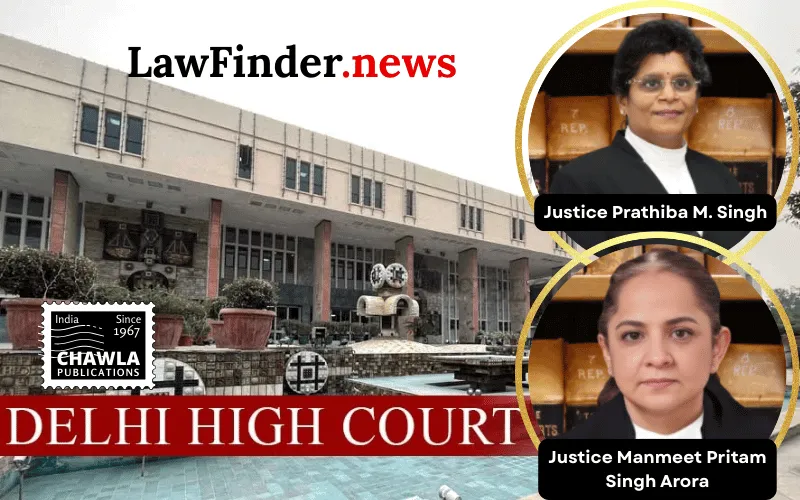
In a landmark judgment aimed at revolutionizing healthcare delivery in the capital, the Delhi High Court has issued a series of directives to significantly improve healthcare services across Delhi. The bench comprising Justices Prathiba M. Singh and Manmeet Pritam Singh Arora issued these directions in the case titled "Court On Its Own Motion v. Union of India."
The court's directives cover a wide array of issues aimed at enhancing healthcare accessibility and efficiency. One of the pivotal changes is the enhancement of the Economically Weaker Section (EWS) income criteria for availing health facilities in Delhi, which has been increased from Rs.2,25,000 to Rs.5,00,000. This move is expected to benefit a larger section of the population, ensuring broader access to healthcare services.
Furthermore, the court has mandated the implementation of the Dr. S.K. Sarin Committee Report to improve human resources, diagnostic services, and digital health systems. Emphasizing the critical need for digital integration, the court directed the full implementation of Health Management Information System (HMIS) modules in government hospitals by January 31, 2026. This implementation is expected to streamline hospital operations and enhance patient care.
In addition, the judgment addressed the establishment and enhancement of Jan Aushadhi Kendras, with 26 already operational in government hospitals. The court urged the assessment for further establishments, ensuring affordable access to essential medicines.
The court also highlighted the urgent need for infrastructure development, focusing on the Lok Nayak Hospital project, where construction had stalled due to budgetary constraints. The court directed immediate action to resolve these issues and expedite the completion of the project to make it operational at the earliest.
The judgment further called for an efficient rollout of government healthcare schemes like PM-JAY and PM-ABHIM, ensuring that entitled citizens receive the intended benefits.
This judgment marks a significant step towards overhauling the healthcare system in Delhi, aiming to provide equitable access to quality healthcare services for all citizens. The court has set a follow-up hearing for February 13, 2026, to review the progress on the implementation of these directives.
Bottom Line:
Directions issued by the Delhi High Court for improving healthcare services in Delhi, including enhancement of EWS income criteria, implementation of Dr. S.K. Sarin Committee Report, better diagnostic and radiological services, implementation of digital health systems, and completion of infrastructure projects like Lok Nayak Hospital.
Statutory provision(s): EWS income enhancement, Dr. S.K. Sarin Committee Report, Health Management Information System (HMIS), Jan Aushadhi Kendras establishment, PM-JAY, PM-ABHIM, Lok Nayak Hospital project completion.
Court On Its Own Motion v. Union of India, (Delhi)(DB) : Law Finder Doc Id # 2836681