Court Rules Denial of Leave Arbitrary, Penalty Disproportionate, Upholds Principles of Natural Justice
In a significant ruling, the Delhi High Court has overturned a disciplinary penalty imposed on Ritu Ravi Prakash, an Assistant Section Officer in the Central Secretariat Service, related to her application for Child Care Leave (CCL). The case, Ritu Ravi Prakash v. Union of India, revolved around the denial of CCL for the petitioner, who sought leave to care for her minor daughters during their critical academic years.
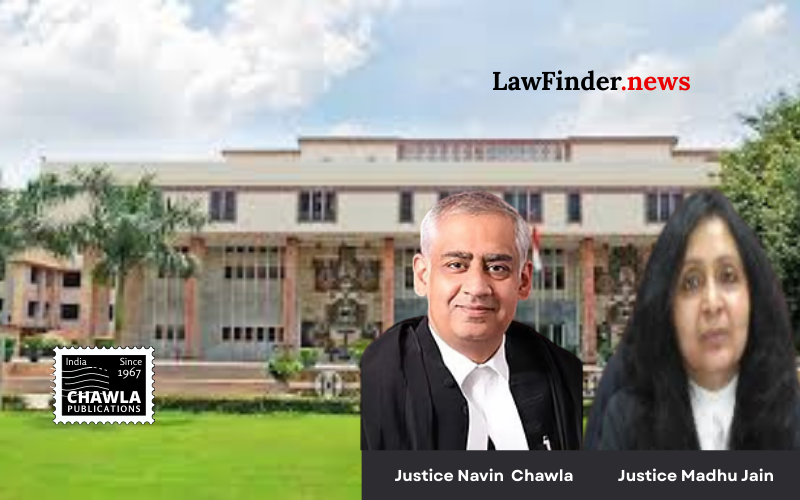
The court, presided over by Justices Navin Chawla and Madhu Jain, found that the denial of CCL was arbitrary and lacked substantiated administrative necessity. Despite repeated applications, Prakash's requests for leave were turned down, citing insufficient staff-a claim the court found unsupported by contemporaneous evidence. Instead, the court noted that similar leave requests by other employees had been granted.
The disciplinary proceedings against Prakash were initiated following her absence from duty, resulting in a penalty that reduced her pay by two stages for three years, impacting future increments. However, the Inquiry Officer initially found the charges unsubstantiated, a conclusion the Disciplinary Authority overturned with a disagreement note that the court deemed prejudiced and not tentative.
Central to the court's decision was the principle that leave cannot be claimed as a matter of right under Rule 43-C of the CCS (Leave) Rules, 1972, but must be considered reasonably. The court emphasized that the denial of CCL should balance administrative exigencies with the welfare of government servants, particularly recognizing the beneficial intent of the CCL scheme.
The court also addressed procedural irregularities, including the violation of Rule 15(2) of the CCS (CCA) Rules, 1965, which mandates a tentative disagreement note by the Disciplinary Authority. The court found that the language of the disagreement note indicated a pre-judged conclusion, thereby vitiating the disciplinary process.
In addition, the penalty was deemed grossly disproportionate, as the allegations did not involve moral turpitude, corruption, or financial irregularity. The court underscored that the punishment should fit the nature of the misconduct, reaffirming the principle of proportionality.
The judgment further criticized the initiation of disciplinary proceedings for a period of absence that had been regularized as Extra-Ordinary Leave (EOL), highlighting the legal principle that once absence is regularized, it cannot form the basis of disciplinary action.
Consequently, the court set aside the penalty order dated September 23, 2019, and the subsequent order by the Central Administrative Tribunal, directing the restoration of Prakash's pay and service benefits within eight weeks.
This ruling not only reinstates the petitioner's rights but also reinforces the judicial scrutiny over administrative actions that affect the fundamental rights of government employees, particularly women seeking child care leave.
Bottom Line:
Child Care Leave (CCL) under Rule 43-C of the CCS (Leave) Rules, 1972 cannot be claimed as a matter of right but must be considered reasonably and in accordance with the spirit of the rule, ensuring a fair balance between administrative exigencies and the welfare of female government servants.
Statutory provision(s): Rule 43-C of the CCS (Leave) Rules, 1972; Rule 15(2) of the Central Civil Services (Classification, Control and Appeal) Rules, 1965; Rule 3(1)(ii) and Rule 3(1)(iii) of the Central Civil Services (Conduct) Rules, 1964.
Ritu Ravi Prakash v. Union of India, (Delhi)(DB) : Law Finder Doc Id # 2811215