Court dismisses plea for reserving seats for advocates with less than ten years of practice, citing proportional representation mandates.
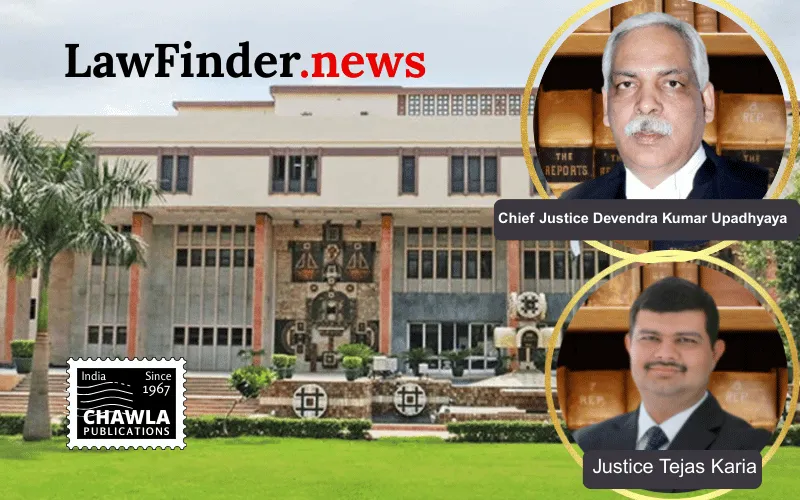
In a significant judgment, the Delhi High Court has reaffirmed the existing framework for Bar Council elections, dismissing a plea seeking exclusive reservation for advocates with less than ten years of practice. The decision, delivered by a Division Bench consisting of Chief Justice Devendra Kumar Upadhyaya and Justice Tejas Karia, underscores the principles of proportional representation as stipulated in the Advocates Act, 1961.
The case, titled "Ramesh Chandra Singh v. Bar Council of Delhi," revolved around the contention that young advocates were being squeezed out of fair representation in the Bar Council elections due to the current electoral structure. The appellant, Ramesh Chandra Singh, argued that the notification issued by the Bar Council of Delhi reserved 12 seats for advocates with over 10 years of experience and 5 seats for female advocates out of a total of 23 posts. He contended that the remaining 6 posts should be exclusively reserved for young advocates.
However, the High Court dismissed the petition, noting that the Advocates Act mandates that one-half of the elected members must be advocates with at least ten years of practice, leaving no provision for exclusive reservation for younger advocates. The court emphasized that interpreting unreserved seats as reserved for younger advocates would lead to complete reservation, contrary to the Act's provisions.
The court also cited the Supreme Court's direction in "M. Varadhan v. Union of India," which mandates that grievances related to election processes be addressed by High-Powered Election Committees, effectively barring civil courts and high courts from entertaining such petitions. This directive further rendered the writ petition non-maintainable.
Furthermore, the court addressed the appellant's claim that the lack of exclusive reservation violated fundamental rights under Articles 14 and 19(1)(g) of the Constitution. It held that proportional representation does not infringe on the fundamental rights of equality and freedom to practice, as senior advocates are allowed to contest in unreserved seats.
The judgment underscores the importance of adhering to established legal frameworks for fair and transparent elections within legal bodies, ensuring that proportional representation does not lead to unintended complete reservation scenarios.
Bottom Line:
Advocates Act, 1961 does not confer a vested right to reserve seats exclusively for advocates with less than ten years of practice in State Bar Council elections.
Statutory provision(s): Advocates Act, 1961 Section 3(2)(b), Constitution of India, 1950 Articles 14 and 19(1)(g)
The ruling reaffirms the legal understanding that while representation is crucial, it must align with statutory provisions to maintain the integrity and fairness of election processes in professional councils.
Ramesh Chandra Singh v. Bar Council of Delhi, (Delhi)(DB) : Law Finder Doc id # 2879414