Court rules murder during employment as accidental; employer liable for penalty, insurance company for compensation.
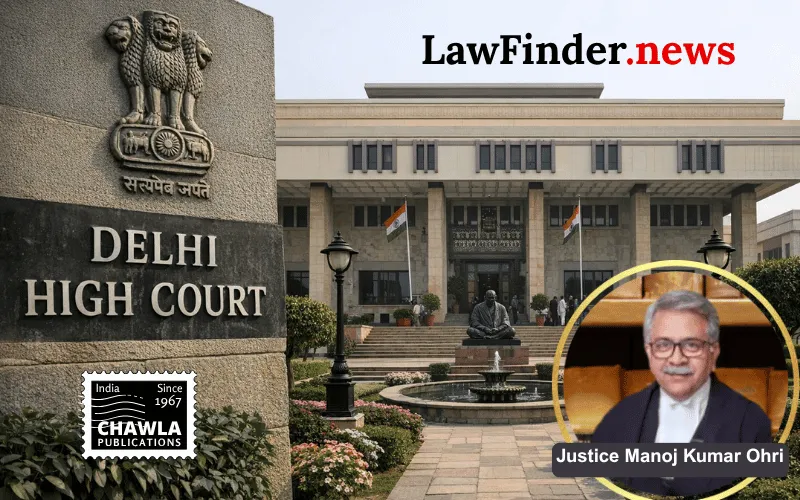
In a significant judgment, the Delhi High Court upheld the decision of the Commissioner under the Employees' Compensation Act, 1923, granting compensation to the legal heirs of Satyaveer Singh, a deceased truck driver, whose death was ruled as accidental despite being a murder. The court, presided over by Justice Manoj Kumar Ohri, concluded that the murder, occurring during the course of employment, lacked evidence of a dominant intent to kill, thereby qualifying as accidental under the law.
The case arose from an incident on the night of May 2, 2017, when Singh was attacked by unidentified assailants while driving his employer's truck in Fatehpur Beri. The incident led to his death, and subsequent legal proceedings to claim compensation under the Employees' Compensation Act. The insurance company, National Insurance Co. Ltd., contested the compensation, arguing that the death was a murder, not an accident, and thus outside the scope of their liability.
The court, however, emphasized the precedent set by the Supreme Court in Rita Devi v. New India Assurance Co. Ltd., which distinguished between murder as an accident and murder simpliciter, focusing on the intent and circumstances surrounding the incident. The court observed that there was no evidence presented to suggest a motive or intent specifically targeting the deceased, thereby reinforcing the classification of the murder as accidental.
The ruling also addressed the employer's liability, affirming that any penalty imposed falls under the employer's responsibility and not the insurer. This aligns with past judgments, notably Ved Prakash Garg v. Premi Devi, which delineates the boundary of insurer liability in cases involving additional penalties.
Additionally, the court dismissed the claimants' appeal for enhanced compensation under the Motor Transport Workers Act, 1961, due to insufficient evidence proving the deceased worked beyond the stipulated hours.
This judgment reinforces the legal interpretation of accidents within employment law, providing clarity on cases involving unforeseen incidents during employment. The decision underscores the judiciary's role in balancing statutory interpretations with factual circumstances to deliver equitable justice.
Bottom line:-
Employees' Compensation Act - Compensation awarded for death during employment - Murder of employee considered accidental if it occurred in the course of employment and there is no evidence of dominant intention to kill.
Statutory provision(s):
Employees Compensation Act, 1923 Section 30, Motor Transport Workers Act, 1961 Section 26
M/s National Insurance Co Ltd v. Sunita Devi, (Delhi) : Law Finder Doc id # 2906365