Punjab and Haryana High Court Upholds Disability Pension for Ex-Serviceman, Dismisses Union of India's Plea. Court affirms the entitlement of disability pension for armed forces personnel discharged on medical grounds, reinforcing Supreme Court precedents.
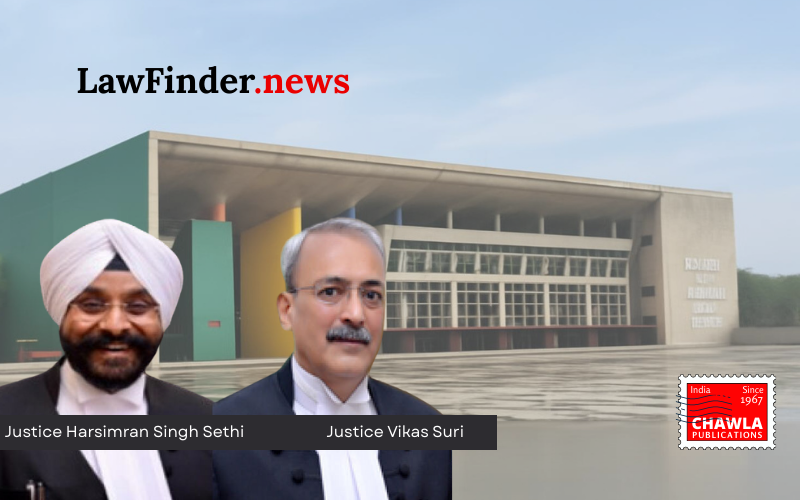
In a landmark judgment, the Punjab and Haryana High Court has upheld the entitlement of disability pension for No 15167317h Ex Nk Surendra Kumar, a former member of the armed forces, dismissing the petition filed by the Union of India. The Division Bench, comprising Justices Harsimran Singh Sethi and Vikas Suri, ruled in favor of the respondent, reinforcing the principle that disabilities attributed to or aggravated by military service warrant pension benefits, even if medical board reports suggest otherwise.
The case revolved around the denial of disability pension to Surendra Kumar, who was discharged from service due to a seizure disorder. The Union of India argued against the tribunal's decision to grant Kumar a disability pension by rounding off his disability to 50%, despite the medical board's report stating that the condition was neither attributable to nor aggravated by military service.
Citing the Supreme Court's judgments in Dharamvir Singh v. Union of India and Bijender Singh v. Union of India, the High Court emphasized the established legal principle that any military personnel found medically fit at the time of selection, yet later invalided due to a medical condition, is presumed to have a service-related disability. The Court pointed out that the burden of proof lies with the employer to demonstrate otherwise.
The Court noted that Kumar had served the armed forces for over 18 years and was medically fit at the time of his induction. His subsequent medical discharge due to seizure disorder, after such a significant service period, was deemed attributable to military service, meriting the disability pension.
Justice Sethi, delivering the judgment, highlighted that any disease resulting in invalidation from service should be presumed to exceed 20% disability, warranting a 50% pension. The judgment further stated that the medical board's report cannot negate the rights of personnel to claim disability benefits.
The High Court dismissed the writ petition filed by the Union of India, finding no merit in the arguments presented, and upheld the tribunal's decision to grant the disability pension to Kumar.
This judgment reiterates the judiciary's commitment to safeguarding the rights and welfare of armed forces personnel, ensuring they receive due recognition and support for service-related health issues.
Bottom Line:
Disability pension is to be granted to armed forces personnel discharged due to a disability attributable to or aggravated by military service, even if medical board reports state otherwise.
Statutory provision(s): Armed Forces Tribunal Act, Supreme Court Judgments in Dharamvir Singh v. Union of India (2013) 7 SCC 316, Bijender Singh v. Union of India, 2025 SSC OnLine SC 895