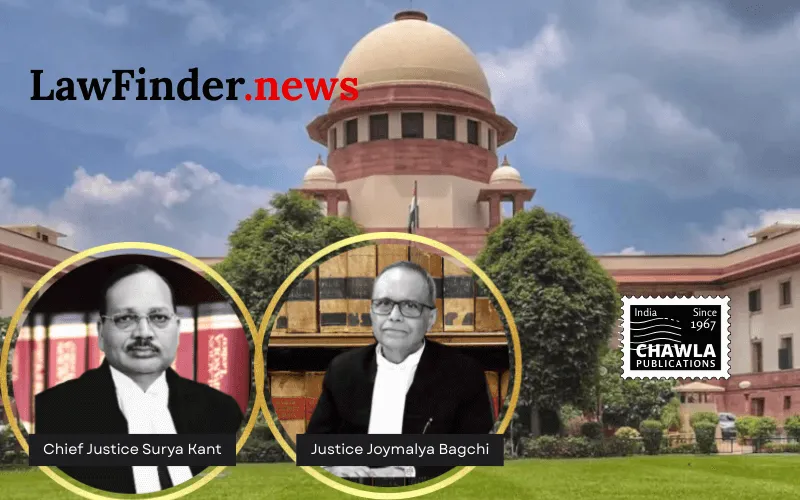
Supreme Court Transfers Cheque Bounce Cases to Hyderabad, Prioritizes Fair Trial Balancing Convenience and Hardship, SC Shifts Cases Involving Small Borrower from Chandigarh to Ensure Justice
In a landmark decision, the Supreme Court of India has ordered the transfer of criminal proceedings under Section 138 of the Negotiable Instruments Act from Chandigarh to Hyderabad, addressing the challenges faced by small-time borrowers in defending themselves against a financially powerful entity. The judgment delivered on November 13, 2025, underscores the court's commitment to ensuring a fair trial and adequate legal representation for the accused, particularly when faced with disproportionate socio-economic standings.
The case involved Golla Naraesh Kumar Yadav, a small-time borrower and proprietor of M/s Hari Cotton Traders and M/s Hari Cotton Ginning Pressing Factory, who faced prosecution initiated by Kotak Mahindra Bank. The bank had presented cheques for collection at its Chandigarh branch, resulting in proceedings in a jurisdiction far from the accused's base in Andhra Pradesh. The petitioners argued that defending themselves in Chandigarh posed significant hardship due to the distance and language barriers, compromising their ability to secure legal assistance.
The Supreme Court, after considering the arguments, emphasized the importance of balancing the relative convenience and inconvenience of both parties. The court noted that the prosecution of cheque bounce cases should not unduly favor the financial entity over the individual accused, particularly in cases where the accused faces undue hardship and inconvenience. Recognizing the accused's fundamental right to a fair trial, the court deemed it necessary to transfer the proceedings to the Chief Metropolitan Magistrate in Hyderabad.
The decision reflects the Supreme Court's broader principles governing the transfer of cases under the Negotiable Instruments Act. It acknowledges the legislative intent to facilitate the payee's convenience but asserts the court's power to transfer cases to meet the ends of justice, as outlined in Section 406 of the Code of Criminal Procedure. The judgment is seen as a significant step toward ensuring equitable access to justice, particularly in cases involving a stark contrast in the socio-economic status of the parties involved.
The Supreme Court's decision diverges from previous judgments, prompting the court to propose the constitution of a Larger Bench for a definitive opinion on the issue. Meanwhile, the proceedings will continue in Hyderabad, offering the accused a more accessible venue for legal representation and defense.
This judgment serves as a beacon for safeguarding the fair trial rights of individuals against the might of large corporations, ensuring that justice remains accessible and balanced regardless of financial power.
Bottom Line:
Transfer of cases under Section 138 - Balancing the convenience and hardship of the accused and the complainant - Transfer allowed to ensure fair trial and adequate legal representation, especially when the complainant is a financially powerful entity and the accused is a small-time borrower.
Statutory provision(s): Negotiable Instruments Act, 1881 Sections 138, 142(2), 142A; Code of Criminal Procedure, 1973 Section 406
Golla Naraesh Kumar Yadav etc. v. Kotak Mahindra Bank, (SC) : Law Finder Doc Id # 2818416