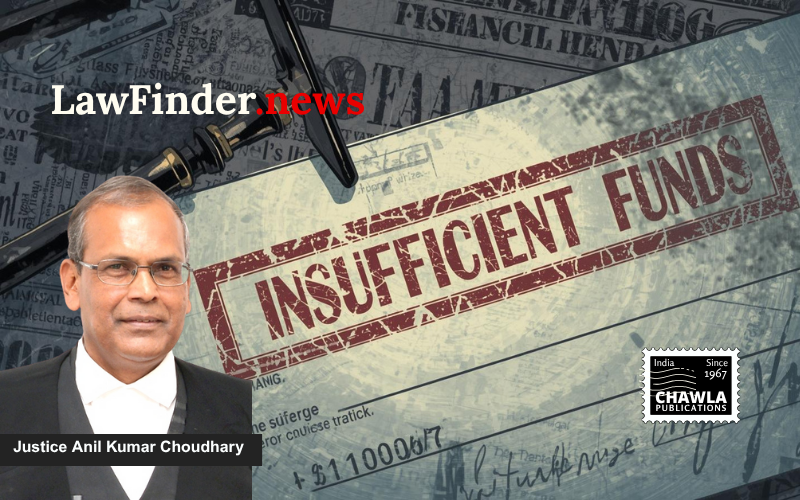
Jharkhand High Court Quashes Cheating Charges in Diesel Sale Case. Court Maintains Proceedings Under Negotiable Instruments Act, Clears Accused of IPC Section 420
In a significant judgment, the Jharkhand High Court has quashed the criminal proceedings against Navin Kumar Verma under Section 420 of the Indian Penal Code (IPC), pertaining to allegations of cheating in a transaction involving the sale of diesel. The judgment, delivered by Justice Anil Kumar Choudhary on November 3, 2025, maintains charges under Section 138 of the Negotiable Instruments Act against the petitioner.
The case involved a transaction where Verma, along with his father, allegedly purchased diesel worth over Rs. 50 lakh from a petrol pump, owned by the complainant, by issuing five cheques of Rs. 10 lakh each. These cheques were subsequently dishonoured due to insufficient funds, leading to the initiation of criminal proceedings for cheating and dishonour of cheques.
The Court clarified that for an offence under Section 420 IPC to be made out, there must be an element of deception from the inception of the transaction. In this case, it found no material indicating deception at the beginning of the transaction. Citing precedents, including Uma Shankar Gopalika v. State of Bihar and Delhi Race Club (1940) Ltd. v. State of Uttar Pradesh, the Court emphasized that non-payment of consideration in a sale of goods does not automatically constitute cheating unless there was fraudulent intent at the outset.
The Court further noted that the primary remedy for non-payment in such transactions lies within civil proceedings, rather than criminal prosecution under IPC Section 420. As a result, the order dated September 3, 2021, by the Judicial Magistrate 1st Class, Chatra, was set aside concerning the IPC charge, but maintained for the offence under the Negotiable Instruments Act.
The judgment reiterates the legal principle that not every breach of contract amounts to a criminal offence of cheating, unless there is clear evidence of intent to deceive from the beginning.
Bottom Line:
Offence under Section 420 of the Indian Penal Code (IPC) - Allegation of cheating in a transaction involving sale of goods - Where consideration amount is paid by cheques and dishonoured due to insufficiency of funds, no offence under Section 420 IPC is made out if no deception was played at the inception of the transaction.
Statutory provision(s): Section 420 IPC, Section 138 of the Negotiable Instruments Act, Section 482 Cr.P.C.
Navin Kumar Verma v. State of Jharkhand, (Jharkhand) : Law Finder Doc Id # 2804079