Calcutta High Court Declares Disqualification of MLA Suvendu Adhikari for Defecting to AITC. Court Overturns Speaker's Decision, Cites Misapplication of Legal Standards in Defection Case
In a landmark decision, the Calcutta High Court has declared Suvendu Adhikari disqualified from his position as a Member of the Legislative Assembly (MLA) for defecting from the Bharatiya Janata Party (BJP) to the All India Trinamool Congress (AITC). The court's decision came in response to two writ petitions challenging the Speaker of the West Bengal Legislative Assembly's earlier ruling, which had dismissed the disqualification petition against Adhikari.
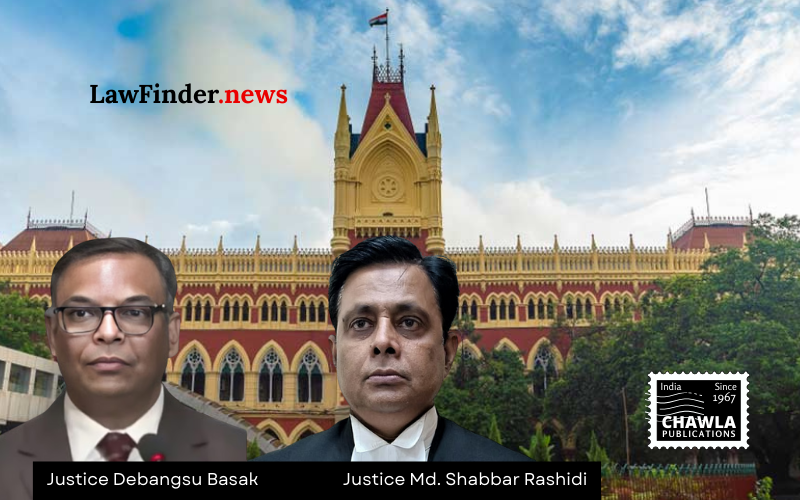
The Division Bench, comprising Justices Debangsu Basak and Md. Shabbar Rashidi, found that the Speaker had applied an incorrect standard of proof by treating the disqualification proceedings as quasi-criminal. The court emphasized that the correct standard of proof is the preponderance of probabilities, not proof beyond reasonable doubt.
The case was initiated after Adhikari, originally elected on a BJP ticket, was alleged to have defected to the AITC in June 2021. Evidence of his defection was substantiated through press conference statements and social media posts, which were not adequately contested by Adhikari.
The court noted that Adhikari's presence at the AITC press conference and his subsequent actions amounted to voluntarily giving up his BJP membership, thereby incurring disqualification under the Tenth Schedule of the Constitution. The Bench criticized the Speaker for misapplying legal principles and failing to appreciate the factual circumstances, leading to a perverse decision.
In setting aside the Speaker's decision, the High Court ruled that Adhikari's disqualification is effective from June 11, 2021. This decision also nullifies his appointment as Chairman of the Public Accounts Committee. The court directed the Speaker to take necessary actions in accordance with the Tenth Schedule and the West Bengal Legislative Assembly (Disqualification on Ground of Defection) Rules, 1986.
This judgment underscores the judiciary's role in ensuring adherence to constitutional provisions regarding defections, and the court reiterated that subsequent events cannot remedy a disqualification once incurred. The decision is a significant development in political jurisprudence and emphasizes the importance of maintaining the integrity of elected positions.
Bottom Line:
Disqualification proceedings under the Tenth Schedule are governed by the principle of preponderance of probabilities and not the criminal standard of proof beyond reasonable doubt.
Statutory provision(s): Constitution of India, Tenth Schedule, West Bengal Legislative Assembly (Disqualification on Ground of Defection) Rules, 1986, Section 65B of the Evidence Act, 1872