Petitioners' Attempt to Quash Charge Sheet Under Article 226 Deemed Legally Untenable Due to Statutory Bar
In a significant judgment delivered by the Gujarat High Court on October 14, 2025, the court dismissed a writ petition filed by two former officers of the Development Commissioner, Kandla Special Economic Zone (KASEZ). The petitioners, Chirala Sesha Srinivas and H.C. Pandya, sought to quash the charge sheet filed against them for alleged involvement in corruption and fraud, citing their exoneration in departmental proceedings. However, the court ruled that such a petition was legally untenable due to explicit statutory restrictions under the Prevention of Corruption Act, 1988.
The petition was initially filed as a Criminal Revision Application but later converted into a Special Criminal Application under Article 226 of the Constitution of India. The petitioners argued that the charges against them were identical to those in a departmental enquiry, which had resulted in their exoneration. They contended that this exoneration should lead to the dropping of criminal proceedings.
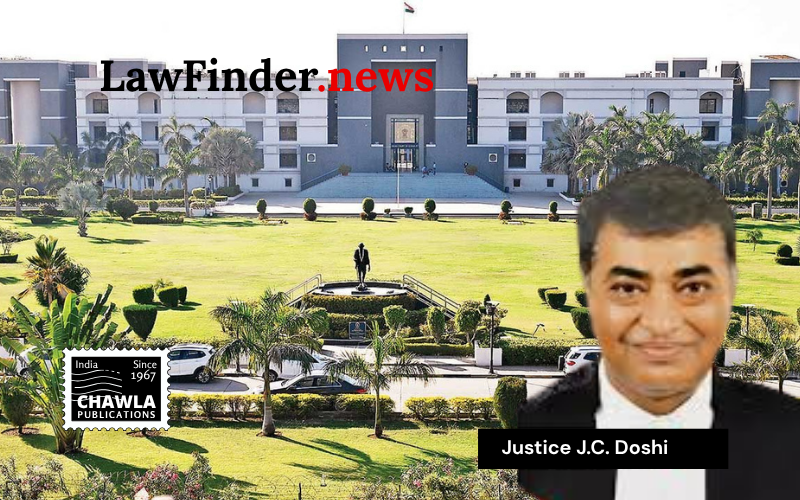
Justice J.C. Doshi, presiding over the case, emphasized the statutory bar under Section 19(3)(c) of the Prevention of Corruption Act, which prohibits stay or revision of interlocutory orders in corruption cases. The judgment noted that invoking writ jurisdiction to circumvent this statutory provision is impermissible. The court highlighted precedents from the Supreme Court, including the cases of Satya Narayan Sharma v. State of Rajasthan and State NCT of Delhi v. Ajay Kumar Tyagi, which reinforce the prohibition on writ jurisdiction in matters involving interlocutory orders under the Act.
The petitioners were accused of submitting a false report that allegedly caused significant revenue loss to the government by facilitating fraudulent diversion of duty-free imports. Despite their claim of merely following official instructions, the court found that the charges warranted judicial scrutiny and could not be quashed based on departmental exoneration alone.
The judgment reaffirmed that judicial orders, once established through charge sheets and cognizance by competent courts, are not open to challenge under writ jurisdiction. The court further noted that the petitioners had not presented adequate foundational pleadings to substantiate their claims, and their arguments were raised belatedly in an additional affidavit rather than during trial proceedings.
Consequently, the petition was dismissed as misconceived and legally untenable, with interim reliefs vacated. This decision underscores the judiciary's commitment to upholding statutory provisions and ensuring that corruption cases are thoroughly adjudicated within the framework of established legal processes.
Bottom Line:
In cases under the Prevention of Corruption Act, 1988, invoking writ jurisdiction under Article 226 of the Constitution of India to challenge interlocutory orders or quash charge sheets is not maintainable due to statutory embargo under Section 19(3)(c) of the Act.
Statutory provision(s):
- - Prevention of Corruption Act, 1988, Section 19(3)(c)
- - Criminal Procedure Code, 1973, Sections 227, 397, 401, 482
- - Article 226 of the Constitution of India