Court Rules Passport Authorities Must Comply with Trial Court Orders on Travel Abroad
In a significant ruling, the Gujarat High Court has directed the passport authorities to issue a passport valid for ten years to Dhaval Sureshbhai Makwana, the petitioner, who is facing pending criminal proceedings. The decision underscores the jurisdiction of the trial court in determining the travel rights of individuals with criminal cases, emphasizing that passport authorities must adhere to directions issued by the court concerning the issuance and validity of passports.
The case arose when Dhaval Sureshbhai Makwana sought a fresh passport despite ongoing criminal proceedings against him. The petitioner argued that an FIR filed against him had resulted in a B-Summary report by the Investigating Officer, which was accepted by the Magistrate Court, yet was challenged successfully in the District & Sessions Court. Consequently, the petitioner expressed a desire to travel abroad, leading to the present writ petition.
The respondent's counsel contended that the petitioner had not submitted any application for passport issuance and highlighted the requirement for court orders permitting individuals facing criminal proceedings to depart from India.
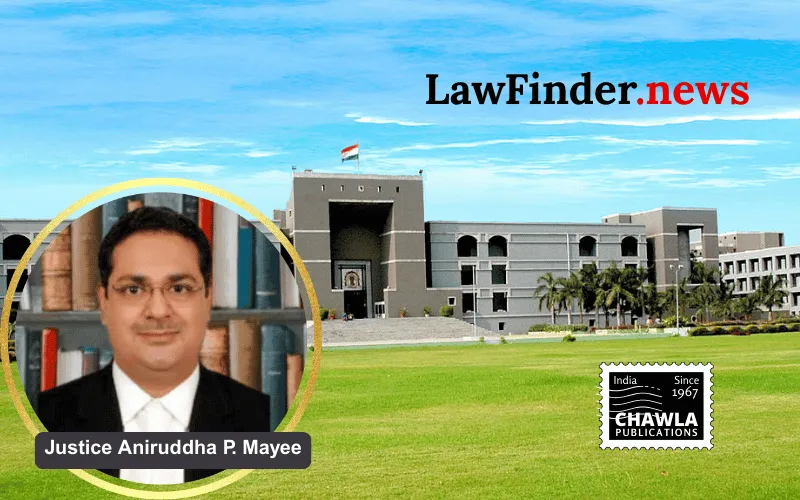
Justice Aniruddha P. Mayee, presiding over the case, referenced the Passports Act, 1967, specifically Section 6(2)(f), and a pertinent GSR Notification 570(E) dated August 25, 1993. The notification clarifies that individuals with pending criminal cases must obtain court permission to travel abroad, and if no specific period for passport validity is mentioned by the court, it should be issued for one year. However, the Bombay High Court had previously ruled that passports, when renewed under court orders as per Passport Rules, should be valid for ten years.
The judgment highlighted the necessity for the trial court to impose conditions for travel abroad while granting permission, which the passport authorities must respect. The court asserted that the trial court is the sole entity with the authority to permit travel abroad for accused individuals, not the passport authorities.
In conclusion, the Gujarat High Court directed the passport authorities to issue Dhaval Sureshbhai Makwana a passport valid for ten years. The court stipulated that Makwana must apply to the appropriate court for permission if he intends to travel abroad, which will set conditions as deemed fit. The passport application process was ordered to be expedited, with a decision required within four weeks from submission.
This ruling sets a precedent in reinforcing the jurisdiction of trial courts over passport issuance for individuals facing legal proceedings, ensuring judicial oversight in cases involving potential international travel of accused persons.
Bottom Line:
Passport cannot be denied to an accused based on pending criminal proceedings; authority to decide on travel abroad lies with the Trial Court, and passport authorities must adhere to directions issued by the Court.
Statutory provision(s): Passports Act, 1967 Section 6(2)(f), GSR Notification 570(E)
Dhaval Sureshbhai Makwana v. State of Gujarat, (Gujarat) : Law Finder Doc id # 2841967