The court affirms the acceptance of mutual consent divorce under Islamic Law, allowing formal declaration of marital status despite no dispute between parties.
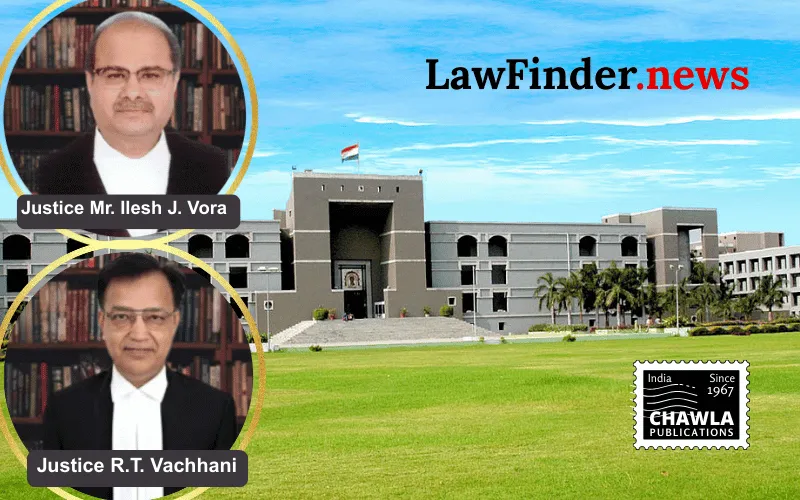
In a significant ruling, the Gujarat High Court reversed a Family Court's decision that dismissed a suit seeking declaratory judgment on a "Mubara'at" divorce agreement. The judgment, delivered by Justices Ilesh J. Vora and R. T. Vachhani, underscores the validity of mutual consent divorces under Islamic law and clarifies the role of Family Courts in such matters.
The appeal arose after the Family Court in Ahmedabad rejected a suit filed by Shahnawaz Sirajuddin Siddiqui, seeking a formal declaration of divorce from his wife, Marufa, under a "Mubara'at" agreement. The Family Court had dismissed the suit citing a lack of cause of action, as there was no denial of marital status by the respondent.
The High Court, however, found this reasoning flawed, emphasizing that Section 7(1)(b) of the Family Courts Act, 1984, allows for declaratory suits regarding marital status without the necessity of a dispute between the parties. The judgment elucidated that such declarations are essential for official documentation and to avoid future legal ambiguities.
The case involved a notarized divorce deed dated July 15, 2024, following a mutual agreement between the parties, both adherents of Islamic law. The agreement included provisions for the wife's maintenance and custody of their child. The High Court highlighted that the dissolution through "Mubara'at," a form of mutual consent divorce, is valid under Islamic law and does not require judicial intervention for its execution, yet a formal declaration can still be sought for clarity and record-keeping.
Referring to precedents from other High Courts, the judgment reiterated that Family Courts must facilitate declarations of marital status when approached, ensuring that such suits are not dismissed on procedural technicalities like the requirement of an adversarial stance.
Ultimately, the Gujarat High Court's decision reinstates the importance of recognizing and documenting consensual divorces under personal laws, providing clarity and legal acknowledgment, which can be crucial for future personal and legal affairs. The ruling is expected to guide Family Courts in handling similar cases, reinforcing the facilitative role of the judiciary in personal law matters.
Bottom line:-
Muslim Law - Family Courts Act, 1984 - A declaratory suit under Section 7(1)(b) of the Family Courts Act, 1984 is maintainable to declare dissolution of marriage under "Mubara'at" (mutual consent) agreement, even when there is no denial of marital status by the other party.
Statutory provision(s): Family Courts Act, 1984 Section 7(1)(b), Civil Procedure Code, 1908 Order 7, Rule 11, Muslim Personal Law (Shariat) Application Act, 1937, Specific Relief Act, 1963 Section 34
Shahnawaz Sirajuddin Siddiqui v. Marufa, (Gujarat)(DB) : Law Finder Doc id # 2928692