Court Restores Arbitral Proceedings Emphasizing Justice Over Procedural Technicalities
In a recent judgment, the Gujarat High Court has set aside an arbitral tribunal's decision that dismissed a claimant's statement of claim due to the non-production of a Power of Attorney (POA). The case, Pandya Naresh Chandra v. Shalin Infrastructure, involved a dispute over agreements to sell residential flats, where the petitioner, an 87-year-old residing in London, was unable to file the POA in time due to logistical delays.
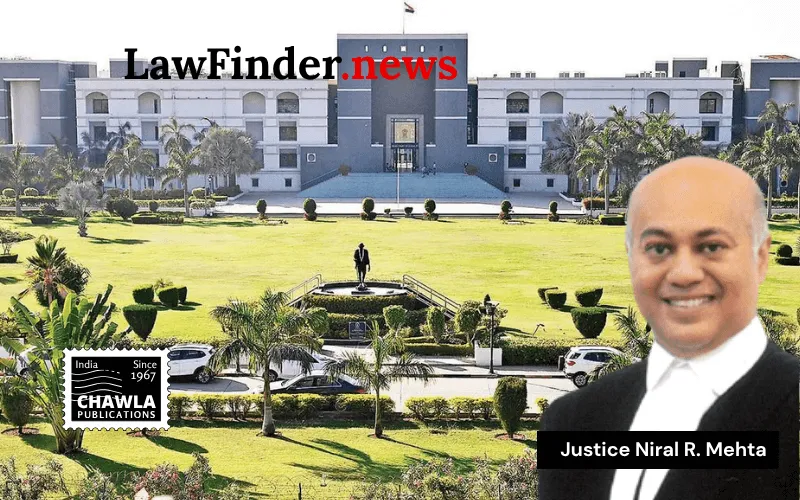
The court, presided over by Justice Mr. Niral R. Mehta, underscored that the procedural lapse of not submitting a POA does not constitute a valid ground for terminating arbitral proceedings. The court held that such a defect is curable and does not affect the claimant's locus standi. The judgment emphasized that arbitration should facilitate justice and not be derailed by procedural technicalities.
The petitioner had initially approached the court after the arbitral tribunal rejected his claim on October 8, 2025, for failing to produce the POA by the deadline. Despite the petitioner's counsel later presenting the original POA the same day, the tribunal refused to reconsider its decision.
Justice Mehta stated that the arbitral tribunal's decision was inconsistent with the Arbitration and Conciliation Act, 1996. He highlighted that the act aims to ensure just, fair, and efficient arbitration processes, minimizing judicial intervention unless explicitly warranted under Sections 25 and 32 of the Act. The court concluded that the tribunal's action was an overreach of its authority and not justified under the statutory framework.
By exercising its supervisory jurisdiction under Article 227 of the Constitution, the High Court quashed the tribunal's order and restored the proceedings, directing the tribunal to adjudicate the disputes on their merits. The court reiterated that procedural lapses should not override substantive justice, and any defect in procedural compliance should be rectified to avoid miscarriage of justice.
This decision reinforces the judiciary's stance on prioritizing substantive justice over procedural formalities, ensuring that arbitration remains an effective means of dispute resolution.
Bottom line:-
Arbitration and Conciliation Act, 1996 - Procedural lapse such as non-production of Power of Attorney does not constitute a valid ground for rejection of claim or termination of arbitral proceedings.
Statutory provision(s):
Arbitration and Conciliation Act, 1996 Sections 25(a), 32; Constitution of India, 1950 Articles 226, 227
Pandya Naresh Chandra v. Shalin Infrastructure, (Gujarat) : Law Finder Doc id # 2928725