Court Affirms No Proprietary Rights for Pujari; Orders Removal of Unauthorized Construction on Public Road
In a significant ruling, the Gujarat High Court dismissed the second appeal filed by Rameshbhai Umakant Sharma, a pujari, who sought proprietary rights over the land on which a Ganesh temple is situated. The appeal challenged the judgments of the lower courts which had ordered the removal of unauthorized constructions on a public road leading to the plaintiff's property.
The case, titled Rameshbhai Umakant Sharma v. Ashaben Kamleshkumar Modi, involved a dispute over land encroachment and ownership rights related to a temple situated on a public entrance road. The appellant, Sharma, claimed adverse possession and proprietary rights over the temple land, arguing that he has been serving as a pujari for more than 12 years.
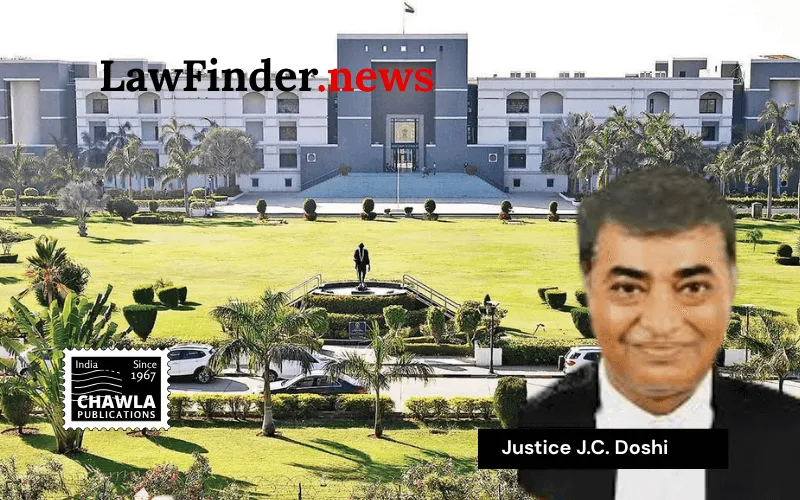
However, Justice J.C. Doshi, presiding over the case, reiterated that a pujari of a temple does not gain proprietary rights over the temple land or the property attached to it; he is merely a servant or appointee of the deity without independent ownership rights. This aligns with the Supreme Court's precedent in State of Madhya Pradesh v. Pujari Utthan Avam Kalyan Samiti, where it was held that temple land is owned by the deity, and the pujari does not hold any proprietary rights.
The court further emphasized that the appeal did not present any substantial question of law, which is a prerequisite for admission under Section 100 of the Civil Procedure Code, 1908. The appellant's arguments concerning adverse possession were found to be lacking in foundational facts necessary to establish such a claim.
The High Court also took a strict stance on unauthorized constructions, citing the Supreme Court's directive against illegal constructions of religious nature on public streets and places. Such constructions are deemed illegal and contrary to the principles of maintaining public order and the rule of law.
Consequently, the appeal was dismissed at the admission stage, upholding the lower courts' decisions to remove the unauthorized temple construction on the public road leading to the plaintiff's property. The judgment reinforces the principle that religious structures cannot be erected without requisite permissions and should not infringe on public spaces.
Bottom Line:
Pujari of a temple does not gain proprietary rights over the temple land or the property attached to it; he is merely a servant or appointee of the deity without independent ownership rights.
Statutory provision(s): Section 100 of the Civil Procedure Code, 1908, Limitation Act, 1963 Articles 58 and 65, Order I Rule 10, Order VII Rule 7, Order XLI Rule 31 of CPC, Section 39 of the Specific Relief Act.
This ruling serves as a precedent in similar disputes, emphasizing the legal framework governing religious land ownership and the necessity to adhere to public space regulations.
Rameshbhai Umakant Sharma v. Ashaben Kamleshkumar Modi, (Gujarat) : Law Finder Doc id # 2842592