High Court affirms no evidence of sales tax collection during exemption period, setting aside penalties imposed by the Revenue.
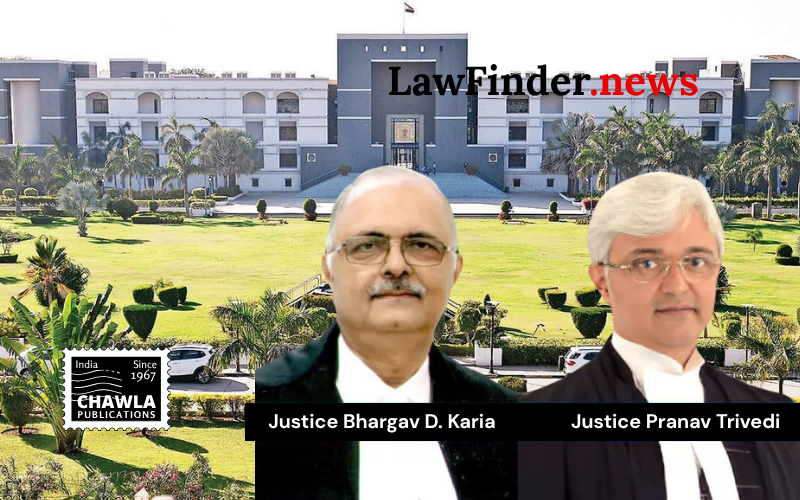
In a significant ruling, the Gujarat High Court has upheld the decision of the Gujarat Value Added Tax Tribunal, dismissing multiple appeals filed by the State of Gujarat against Hindustan Coca Cola Beverages Pvt. Ltd. The appeals were centered on allegations that the company had collected sales tax during a period when it was exempted under the Gujarat Sales Tax Act, 1969. The Division Bench, comprising Justices Bhargav D. Karia and Pranav Trivedi, found no substantial evidence to support claims of tax collection, thereby affirming the Tribunal's conclusions.
The controversy stemmed from the Revenue's assertion that Hindustan Coca Cola included a tax component within the sale price of its products during the exemption period. This assertion was based on the company's accounting practices, which involved maintaining dual accounting systems under IGAAP and USGAAP. The Revenue's case hinged on the belief that the company's practices implied tax collection, despite invoices indicating 'Nil' tax and affidavits from distributors denying tax payments.
The Tribunal had previously concluded that there was no direct or indirect evidence of tax collection. It emphasized the significance of the IGAAP system, relevant for assessment under the Sales Tax Act, which did not show any tax collection. The Tribunal also highlighted that the company's practice of maintaining uniform Maximum Retail Price (MRP) across India did not imply tax collection, aligning its reasoning with a Supreme Court decision in Hindustan Lever Limited.
In the appeals, the Revenue contended that the Tribunal erred in its judgment, arguing that the inclusion of additional evidence not part of the initial assessment should not have influenced the decision. However, the High Court found that the Tribunal's reliance on the accounting practices and affidavits was justified and consistent with legal precedents.
The High Court further referenced the Supreme Court's decision in the Hindustan Lever Limited case, underscoring that merely stating MRP as inclusive of all taxes does not prove tax collection. The judgment clarified that business policy decisions, such as maintaining uniform pricing, cannot be construed as tax collection without explicit evidence.
Ultimately, the High Court dismissed the appeals, reinforcing that the Tribunal's decision was well-founded, and the penalties imposed by the Revenue were unwarranted. This judgment not only absolves Hindustan Coca Cola of the alleged infractions but also sets a precedent in interpreting tax exemption and collection under the Gujarat Sales Tax Act.
Bottom Line:
Sales Tax Law - Penalty under Gujarat Sales Tax Act, 1969 - Mere inclusion of sales tax component in sale price during exemption period does not prove collection of sales tax - Books maintained under IGAAP relevant for assessment - Tribunal's conclusion upheld.
Statutory provision(s): Gujarat Sales Tax Act, 1969 Sections 46(1)(i), 56(1); Gujarat Value Added Tax Act, 2003 Section 78