Chandigarh, Apr 8 The Punjab and Haryana High Court has set aside the death sentences awarded to two men in a 2019 rape and murder case of a seven-and-a-half-year-old girl in Ludhiana's Doraha.
The HC also remanded the case back to the trial court, asking it to begin the trial from the stage of recording the statement of the accused and a fresh judgement be passed.
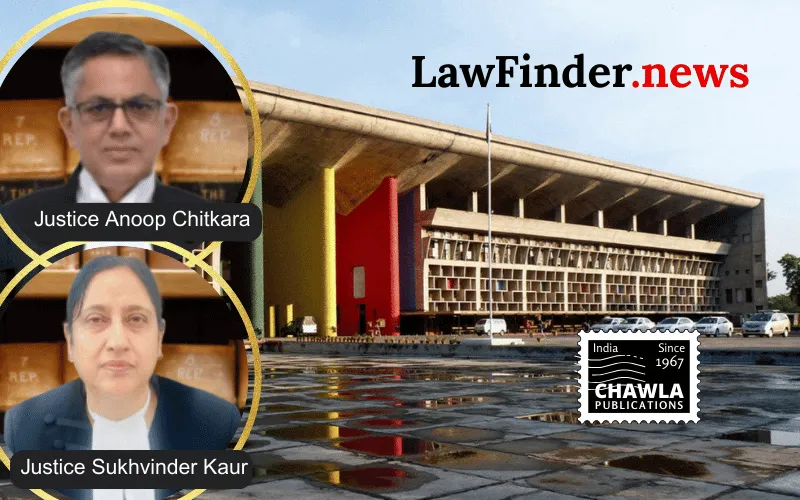
"It is not a case where the trial court had put all the incriminating circumstances to the accused," observed the bench of Justices Anoop Chitkara and Sukhvinder Kaur in the April 6 order.
The trial court in 2023 had awarded capital punishment to the two men in the rape and murder case. The case has its genesis in an FIR registered in March 2019.
According to the prosecution, the victim, whom the court affectionately referred to as 'Laadli', was allegedly abducted by her cousin on March 9, 2019 in Doraha in Ludhiana.
He was later joined by the co-accused and both of them raped her in an uninhabited godown. Subsequently, they strangulated her and also inflicted brick blows on her head, which resulted in her death.
Both the accused were later convicted and awarded death penalty.
While hearing the pleas of the accused who challenged their conviction and sentence and answering murder reference sent by the trial court for confirmation of death sentence, the HC bench observed that the prominent concern for the court is the manner of investigation, omission in putting all the incriminating evidence to the accused under section 313 of the Code of Criminal Procedure and repercussions on the trial, and also said, "in our considered opinion, if not put would cause prejudice to the accused."
It was emphasised that the objective of recording statement of the accused under Section 313 of the CrPC is to put all incriminating evidence to the accused so as to provide him an opportunity to explain such incriminating circumstances appearing against him in the evidence of the prosecution.
The court observed that a perusal of statements of both the accused clearly pointed out the omission in putting to them the most material evidence of sexual assault and associated injuries as observed during the post-mortem examination conducted by a team of doctors.
"Laadli was murdered after she was subjected to rape, and had she not been sexually assaulted, there would have been no motive to conceal evidence by killing her. Thus, primarily, we are dealing with the case of rape, and the most important question, i.e., the evidence that the victim was raped, was not put to the accused," observed the court.
"Since the attention of none of the accused was drawn to the factum of rape, on this score alone, this is a highly defective questioning under 313 CrPC, 1973," it said.
The bench also pointed out that the accused were not questioned about the DNA report.
"The most important defect is that although the trial court had convicted and sentenced the accused/convicts by relying upon the DNA report, whereas the DNA report was never put to any of the accused in a statement under 313 of the CrPC," said the court.
"The DNA report is the most crucial document, and if it is read in evidence without affording an opportunity to the accused under section 351 of BNSS [313 CrPC, 1973] to explain the same, it is most likely to cause prejudice to the accused," observed the court.
"All these deficiencies, which amount to irregularities, are curable, and once cured, shall neither cause any prejudice to the accused nor failure of justice to any," said the bench.
The court further said, "We are left with no other option but to set aside the judgment of conviction and sentence and remand the matter back to the trial court to resume the trial from the stage of recording the statements of both the accused."
The HC bench said the trial court shall put all the incriminating evidence separately to both the accused by making small questions as per the facts and evidence under 351 BNSS [313 CrPC, 1973], and afford them an opportunity to lead defence evidence, if they want to do so, provided the same is done within a reasonable time.
"Thereafter, on hearing the parties pass a fresh judgment in accordance with the law," it said.
State of Punjab v. Vinod Shah, (Punjab And Haryana)(DB) : Law Finder Doc Id # 2879711