Matrimonial Discord and Lack of Evidence Lead to Acquittal of Accused in the State of J&K v. Sanjay Singh
In a significant ruling, the Jammu and Kashmir High Court upheld the acquittal of Sanjay Singh and others, who were accused of abetting the suicide of Singh's wife, Arti Devi. The case, which has been under scrutiny since 2011, was dismissed on the grounds of insufficient evidence to support the charge under Section 306 of the Ranbir Penal Code (RPC).
The appeal, filed by the State of Jammu and Kashmir, sought to overturn the trial court’s decision from November 16, 2016, which acquitted the accused due to the lack of substantial evidence. The prosecution alleged that Arti Devi was subjected to continuous harassment by her husband and in-laws, primarily over her inability to conceive, which allegedly led her to commit suicide. However, the High Court found no tangible evidence of intentional instigation or active participation by the accused that could constitute abetment to suicide.
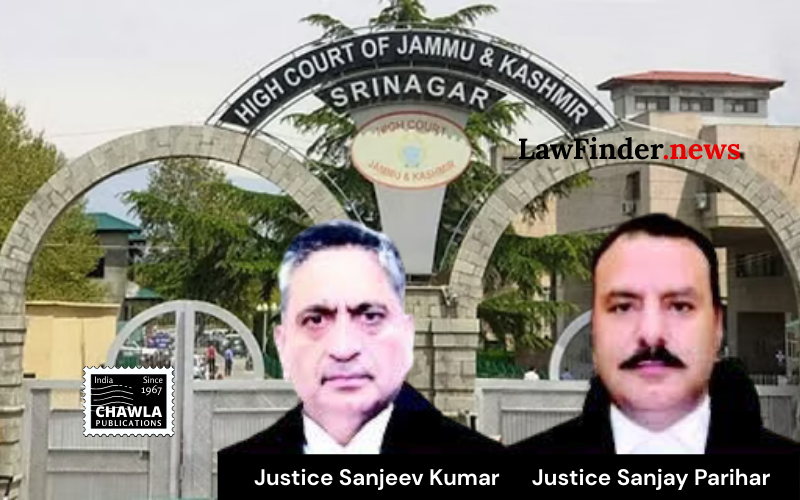
The judgment, delivered by Justices Sanjeev Kumar and Sanjay Parihar, highlighted that mere matrimonial discord, sporadic quarrels, or harassment not amounting to persistent cruelty do not satisfy the legal requirements for abetment to suicide. The court emphasized the necessity of evidence showing intentional and active participation by the accused to hold them liable under Section 306 RPC.
The prosecution's case relied heavily on the testimonies of the deceased's family members, who claimed that Arti Devi was harassed for not bearing a child. However, the High Court noted inconsistencies and contradictions in their statements. The court also pointed out that there was no evidence to suggest that the deceased was subjected to dowry-related cruelty or harassment.
During the trial, it was revealed that the accused tried to portray the suicide as a heart attack, which aroused suspicion among the deceased's family. However, this allegation was not substantiated with concrete evidence. The medical examination confirmed that the death resulted from asphyxia due to hanging, but no external marks of violence were found on the body.
The High Court reiterated the principle of "double presumption" in favor of the accused in acquittal cases, underscoring that the presumption of innocence is further reinforced by the trial court’s acquittal. The judgment concluded that the prosecution failed to present a credible case to justify a conviction under Section 306 RPC.
The High Court's decision serves as a reminder of the high threshold of evidence required to convict individuals of abetment to suicide, emphasizing the need for intentional instigation and persistent cruelty to establish such charges.
Bottom Line:
Mere matrimonial discord, sporadic quarrels, or harassment not amounting to persistent cruelty do not constitute abetment to suicide under Section 306 of the Ranbir Penal Code (RPC).
Statutory provision(s): Ranbir Penal Code, Section 306 (Abetment to Suicide), Section 107 RPC (Abetment)
State of J&K v. Sanjay Singh, (Jammu And Kashmir)(DB) : Law Finder Doc Id # 2804768