Court dismisses plea challenging population disparity, endorsing adherence to statutory norms
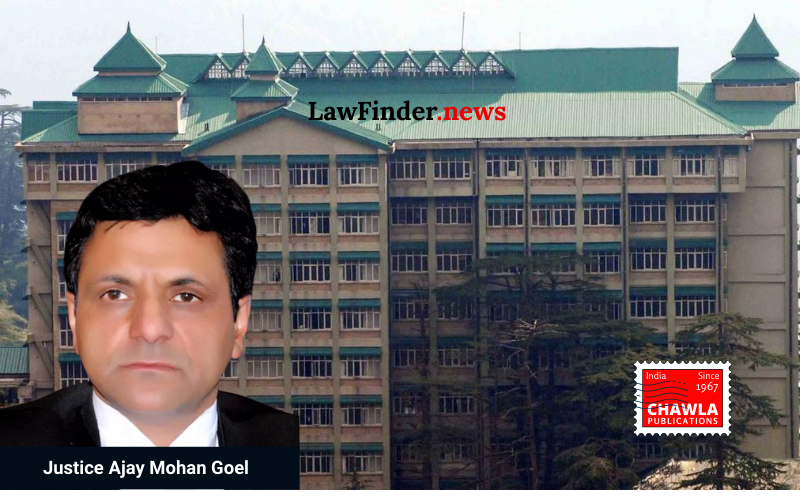
In a significant ruling on November 11, 2025, the Himachal Pradesh High Court, presided over by Mr. Ajay Mohan Goel, J., dismissed the petition filed by Shiv Singh Sen challenging the delimitation process of municipal wards in Sundernagar. The petitioner had contended that Ward No. 4 exhibited a disproportionate population compared to other wards, which, according to him, contravened Rule 4 of the Himachal Pradesh Municipal Council Election Rules, 2015, mandating equal population distribution across wards.
The court examined the details surrounding the delimitation process carried out under the notification dated May 24, 2025, by the State Election Commission, acting under Article 243ZA of the Constitution and relevant provisions of the Municipal Corporation Act, 1994. The delimitation was aimed at reorganizing ward boundaries based on equal population distribution and recognizable geographical boundaries.
Shiv Singh Sen's objections were initially dismissed by the Deputy Commissioner, Mandi, and further rejected by the appellate authority on July 19, 2025. The High Court, upon reviewing the case, found no evidence of mala fides or arbitrariness in the process and noted that several other wards, like Nos. 11, 12, and 13, also have populations exceeding 2,000, similar to Ward No. 4. This disproved the petitioner's claim that Ward No. 4 was uniquely oversized.
The judgment emphasized the limited scope of judicial intervention in administrative processes like delimitation, unless substantial evidence of irregularities or bad faith is presented. It underscored the importance of maintaining geographically compact and contiguous wards and recognized the administrative discretion involved in resource allocation and development planning.
The court acknowledged the detailed reasoning provided by the appellate authority, which highlighted the administrative complications and broader public interest in maintaining the current delimitation scheme. It noted the absence of collective representation from affected residents and stressed the impracticality of redrawing boundaries based on individual grievances without significant public demand.
Ultimately, the High Court upheld the decisions of the statutory authorities, affirming that the delimitation process was conducted appropriately and did not warrant judicial interference. The dismissal of the petition reinforces the adherence to statutory mandates and the integrity of administrative processes in urban governance.
Bottom Line:
Delimitation of municipal wards must adhere to principles of equal population distribution and recognizable geographic boundaries as mandated under Rule 4 of the Himachal Pradesh Municipal Council Election Rules, 2015.
Statutory provision(s): Article 243ZA of the Constitution of India, Section 9 and 10 of the Municipal Corporation Act, 1994, Section 10 and 281 of the Himachal Pradesh Municipal Act, 1994, Himachal Pradesh Municipal Council Election Rules, 2015 Rule 4
Shiv Singh Sen v. State of Himachal Pradesh, (Himachal Pradesh) : Law Finder Doc Id # 2811279