Supreme Court Upholds NCLT's Dismissal of Insolvency Proceedings Against Solvent Company, Apex Court Reinforces IBC’s Purpose as a Restructuring Tool, Not a Debt Recovery Mechanism
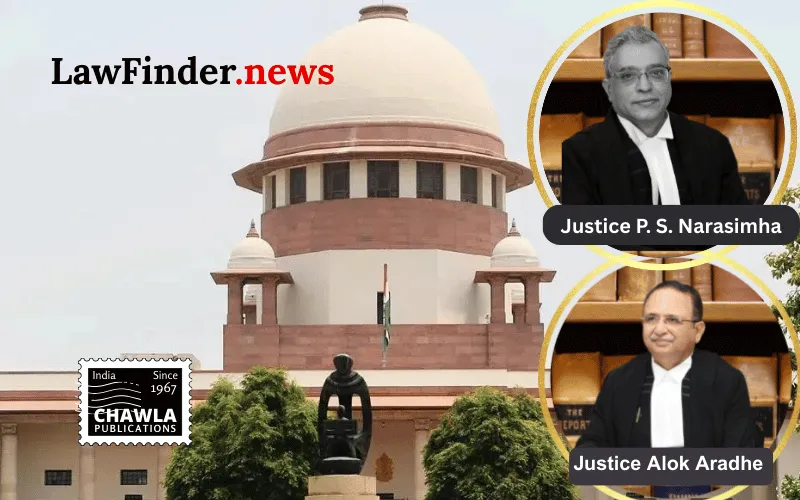
In a landmark decision, the Supreme Court of India has set aside the National Company Law Appellate Tribunal's (NCLAT) decision to admit an insolvency petition against Anjani Technoplast Ltd., reinstating the National Company Law Tribunal's (NCLT) earlier order that dismissed the proceedings. The judgment, delivered by Justices Pamidighantam Sri Narasimha and Alok Aradhe, highlighted the misuse of the Insolvency and Bankruptcy Code (IBC) as a debt recovery mechanism rather than its intended purpose of corporate debtor revival and reorganization.
The case revolved around a financial dispute between Anjani Technoplast Ltd. and Shubh Gautam, who had initially obtained a civil decree for a monetary claim against the appellant. Rather than pursuing the established execution mechanism under the Civil Procedure Code (CPC), the respondent filed for a Corporate Insolvency Resolution Process (CIRP) under Section 7 of the IBC, alleging default on a financial debt.
The Supreme Court emphasized that the IBC is not a tool for individual debt recovery but is designed to address genuine insolvency issues and ensure the revival of financially distressed companies. The Court noted that the appellant, Anjani Technoplast Ltd., is a solvent and functioning company, with substantial revenue and profitability, thereby rendering the insolvency application inappropriate.
The judgment underscored the legislative intent of the IBC, which aims to protect and rejuvenate corporate debtors rather than serve as an alternative mechanism for creditors to enforce monetary claims. The Court reiterated that the misuse of the IBC process as a coercive measure for debt recovery is contrary to its legislative purpose, as emphasized in previous Supreme Court rulings such as Swiss Ribbons Pvt. Ltd. v. Union of India and Pioneer Urban Land and Infrastructure Ltd. v. Union of India.
The Supreme Court's decision highlights the importance of using the appropriate legal avenues for debt recovery, urging decree holders to utilize the execution mechanisms under the CPC, which are specifically designed for such purposes. The Court also cautioned against initiating insolvency proceedings with malicious intent or for purposes other than insolvency resolution, which could lead to penalties under Section 65 of the IBC.
In conclusion, the Supreme Court's ruling serves as a reminder of the IBC's primary objective to facilitate the revival of corporate debtors and not merely to function as a debt recovery tool. The judgment reinforces the need for a judicious approach in invoking insolvency proceedings, ensuring that they are reserved for cases of genuine financial distress.
Statutory provision(s): Insolvency and Bankruptcy Code, 2016 Sections 3(10), 5(7), 5(8), 7, 65; Civil Procedure Code, 1908; Negotiable Instruments Act, 1881 Section 138
Anjani Technoplast Ltd. v. Shubh Gautam, (SC) : Law Finder Doc id # 2887655