Supreme Court Upholds Strict Timelines Under Insolvency and Bankruptcy Code, Appeals Beyond Prescribed Time Limit Under Section 62 of IBC Will Not Be Entertained, Re-affirms Supreme Court
In a landmark decision reaffirming the stringent timelines prescribed under the Insolvency and Bankruptcy Code, 2016 (IBC), the Supreme Court of India has dismissed an appeal filed by CA Ramchandra Dallaram Choudhary against Adani Infrastructure and Developers Private Limited. The court underscored that appeals filed beyond the statutory limit under Section 62 of the IBC cannot be entertained, emphasizing the importance of strict adherence to the timelines set forth by the legislation.
The appeal, initially presented on January 29, 2026, faced hurdles due to delays in filing and re-filing, with an office-reported delay of seven days followed by an additional 82 days in curing defects. The appellant sought condonation of these delays, arguing for a more liberal interpretation given the administrative lapses and oversight within the office of the liquidator.
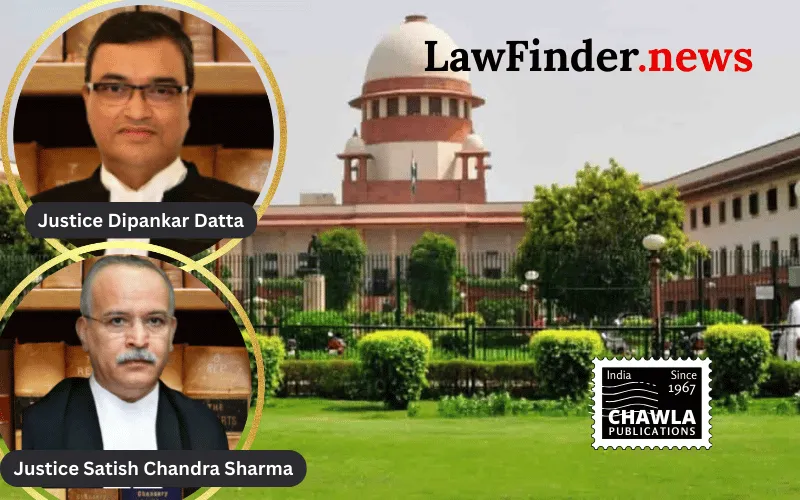
However, the bench, comprising Justices Dipankar Datta and Satish Chandra Sharma, highlighted that the IBC is designed to ensure a time-bound resolution process that cannot be overridden by procedural laws such as the Supreme Court Rules, 2013. The court pointed out that while defects in appeals must be cured within 28 days, any extension beyond this period is impermissible, as it would contravene the legislative intent of the IBC.
The judgment drew on precedents set in cases like Mobilox Innovations (P) Ltd. v. Kirusa Software (P) Ltd. and Kalparaj Dharamshi v. Kotak Investment Advisors Limited, which emphasize the essence of strict timelines in the insolvency resolution process. The court firmly stated that allowing delays in the appeal process could lead to misuse through dilatory tactics, undermining the IBC's objective of expedition and finality.
The decision also touched upon the limited scope of judicial discretion in condoning delays, noting that the concept of 'sufficient cause' cannot be liberally applied to circumvent the statutory timelines under the IBC. The court dismissed the appeal as time-barred, stating that no substantial cause was shown to justify the delays in filing and re-filing.
This ruling serves as a significant reminder of the rigid procedural requirements under the IBC and the necessity for litigants to adhere strictly to prescribed timelines to avoid dismissal of appeals. It reinforces the legislative intent of ensuring swift resolution of insolvency cases, critical for the efficient functioning of the corporate debt resolution process in India.
Bottom Line:
Insolvency and Bankruptcy Code, 2016 - Strict adherence to timelines prescribed under Section 62 is essential, and appeals filed beyond the statutory limit, whether defective or otherwise, cannot be entertained. The concept of condonation of delay is alien to the IBC framework beyond the express provisions stipulated under the law.
Statutory provision(s): Insolvency and Bankruptcy Code, 2016 Section 62, Supreme Court Rules, 2013, Constitution of India, 1950 Article 142