Court Restricts "Hire and Fire" Practice, Ensures Continuation of Experienced Temporary Faculty Until Regular Appointments
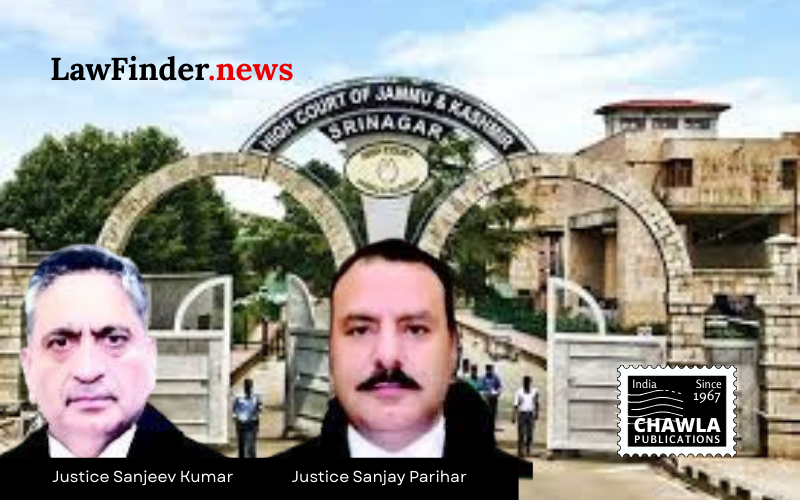
In a significant ruling, the Jammu and Kashmir High Court has upheld the rights of contractual faculty members employed at the University of Kashmir, marking a pivotal moment in service law governance. The Division Bench, comprising Justices Sanjeev Kumar and Sanjay Parihar, delivered a comprehensive judgment on November 7, 2025, addressing several intra-court appeals filed by the University authorities against a prior order favoring the contractual faculty.
The court emphasized that ad hoc, contractual, or temporary employees cannot be arbitrarily replaced by another set of similar appointees. Such replacements, the court noted, are permissible only when made with regularly appointed candidates through a proper selection process. This decision effectively curtails the "hire and fire" policies that have been deemed violative of Articles 14 and 16 of the Constitution, which guarantee equality before the law and equality of opportunity in matters of public employment, respectively.
The case arose when the University of Kashmir sought to replace existing contractual faculty with newly engaged candidates on similar arrangements, prompting the affected faculty members to file petitions. The Writ Court initially ordered that these faculty members should continue their roles until regular appointments are made, a decision that the University challenged through multiple appeals.
In its judgment, the High Court underscored the importance of retaining experienced ad hoc teachers, noting that their continued presence is beneficial for maintaining academic stability and enhancing the learning environment. The court further clarified that while exigencies may necessitate temporary academic arrangements, these should prioritize candidates who have already demonstrated their competence in prior sessions.
The court also addressed the specific needs of the University’s Department of Law, directing the Bar Council of India to assess faculty requirements and streamline temporary arrangements under the Advocates Act, 1961 and the Rules of Legal Education, 2008. It stressed that part-time or guest faculty should be limited to teaching specific subjects or lectures and should not substitute core regular faculty.
The judgment has been hailed as a victory for contractual employees, ensuring that they cannot be displaced by similar appointees until substantive posts are filled through regular selection processes. It also mandates the University to offer continued engagements to experienced faculty first, benefiting both the institution and the student community.
This ruling sets a precedent for other educational institutions, reinforcing the principle that temporary academic appointees should not be exploited through arbitrary employment practices. It is expected to influence the employment policies of universities and colleges across India, advocating for fair treatment and stability in academic appointments.
Bottom Line:
Contractual or ad hoc appointees cannot be replaced by another set of similar appointees until regular appointments are made to substantive posts.
Statutory provision(s): Articles 14 and 16 of the Constitution of India, Advocates Act, 1961, Rules of Legal Education, 2008