Supreme Court Dismisses Frivolous Writ Petition Seeking Declaration of Past Decisions as Per Incuriam, Petitioners' Attempt to Challenge Supreme Court Rulings Deemed Vexatious; Future Similar Petitions Barred Without CJI Approval
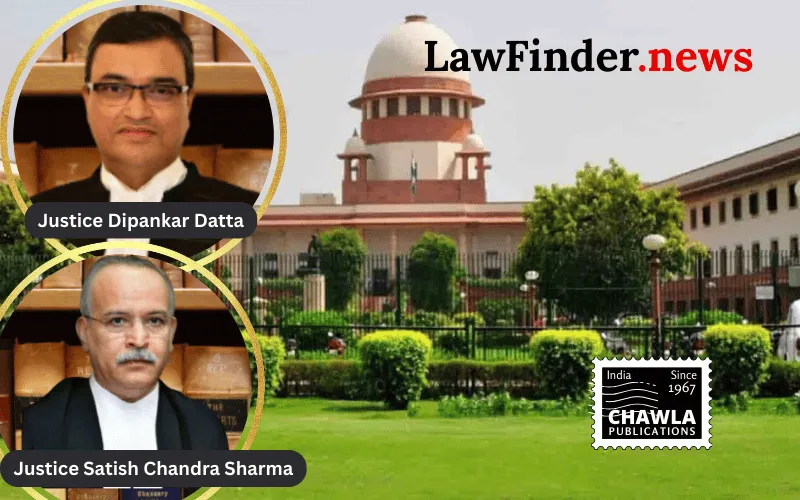
In a significant ruling, the Supreme Court of India dismissed a writ petition under Article 32 of the Constitution, labeling it as frivolous and vexatious. The petition, filed by Maryamaa Josh and others, sought to have past decisions by coordinate benches of the Supreme Court declared as per incuriam or sub silentio. The bench, comprising Justices Dipankar Datta and Satish Chandra Sharma, upheld the principle that judicial orders passed by competent courts do not infringe upon the fundamental rights of citizens. Instead, such orders must be contested through the prescribed legal procedures.
The petitioners specifically challenged the decisions in the cases of "Pro Knits v. Board of Directors of Canara Bank" and "Shri Shri Swami Samarth Construction & Finance Solution v. NKGSB Coop. Bank Ltd.," arguing that these decisions should be considered void under the doctrines of per incuriam or sub silentio. However, the Supreme Court reiterated its stance from the landmark judgment in "Naresh Shridhar Mirajkar v. State of Maharashtra," emphasizing that judicial orders must be legally contested rather than being declared void through writ petitions.
In a move to prevent future misuse of Article 32, the court ordered that no further writ petitions seeking similar declarations against the specified decisions would be registered without prior approval from the Chief Justice of India. This ruling aims to curb the filing of frivolous petitions that unnecessarily burden the judicial system.
The court's decision underscores the importance of following established legal procedures to challenge judicial orders, reinforcing the integrity of the judiciary and preventing the dilution of judicial processes through baseless petitions.
Bottom Line:
Judicial orders passed by competent courts/tribunals do not affect the fundamental rights of any citizen. If a party is aggrieved by a judicial order, such order must be challenged according to the procedure prescribed by law.
Statutory provision(s): Article 32 of the Constitution of India
Maryamaa Josh v. Union Of India, (SC) : Law Finder Doc id # 2854399