High Court Sets Aside Lower Court's Ruling, Declares Properties as Public Religious and Charitable Trust
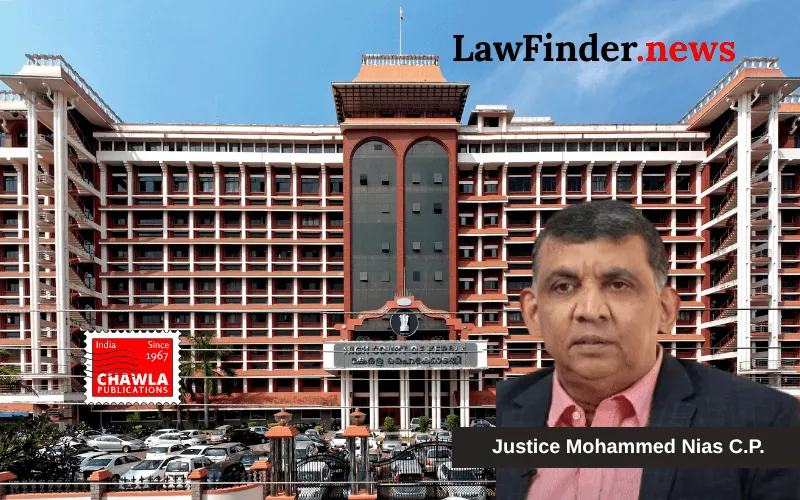
In a landmark decision, the Kerala High Court, presided over by Justice Mohammed Nias C.P., has overturned a prior judgment by the District Court of Thrissur concerning the ownership and trust status of properties associated with the Brethren Assembly. The High Court recognized the existence of a constructive public religious and charitable trust in the case involving C.C. Mosses and others versus Steward Co. Limited I and others, identifying the properties as being dedicated to religious and charitable purposes.
The case, which has its roots in a suit filed in 1990, revolved around the question of whether the properties acquired by Mr. Nagel, a Christian missionary, were meant for personal benefit or were impressed with a trust character for public purposes. The appellants, members of the Brethren Assembly, contended that the properties were acquired for religious and charitable activities, such as prayer halls, orphanages, and schools, and not for Mr. Nagel’s personal use.
The trial court had previously dismissed the suit, ruling that there was no trust, express or constructive, associated with the properties. However, upon appeal, the High Court found that a constructive trust could indeed be inferred based on historical circumstances, the conduct of parties, and the long-standing use of the properties for religious and charitable purposes.
Justice Mohammed Nias C.P. highlighted that the absence of a formal deed of dedication does not negate the existence of a trust. The judgment underscored that the properties were intended for religious and charitable objectives, supported by substantial evidence of their use for public benefit, including religious gatherings and charitable institutions.
The High Court’s decision mandates the remand of the case back to the trial court for determination of additional issues, such as the removal and accountability of trustees, which the lower court had not addressed. The trial court has been directed to expedite the proceedings, with a deadline set for final disposition within six months.
This ruling marks a significant affirmation of the principles governing constructive public trusts, emphasizing that public dedication can be inferred from the purpose and use of properties even in the absence of explicit documentation.
Bottom line:-
A constructive public trust can be inferred even in the absence of an express declaration or formal deed of dedication, based on historical circumstances, conduct of parties, public user, and long-standing religious and charitable activities associated with the property.
Statutory provision(s): Civil Procedure Code, 1908 Section 92
C.C.Mosses v. Steward Co. Limited I, (Kerala) : Law Finder Doc id # 2927552