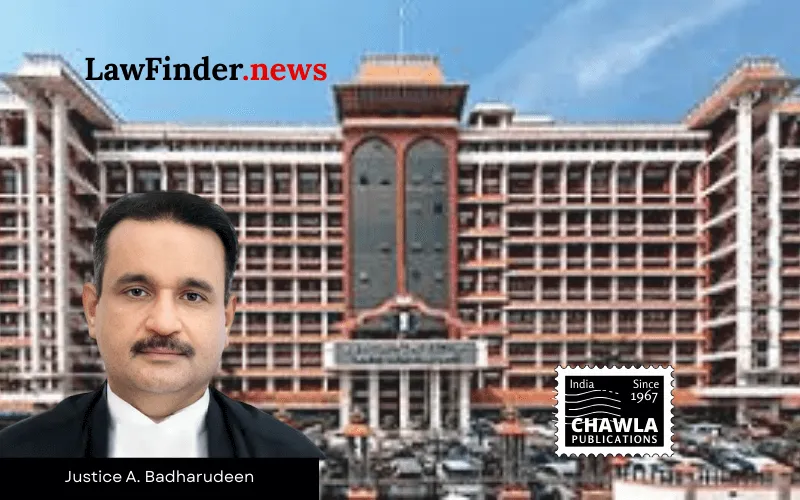
Court affirms the bar on anticipatory bail under SC/ST Act, citing prima facie evidence of abuse within public view.
In a significant ruling, the Kerala High Court, presided over by Justice A. Badharudeen, dismissed the anticipatory bail plea of Sajith, the accused in a caste-based abuse case, thereby upholding the order of the Special Judge. The case, registered as Crime No. 268/2026 at Sooranadu Police Station, involves serious allegations under the Scheduled Castes and the Scheduled Tribes (Prevention of Atrocities) Act, 1989, and the Bharatiya Nyaya Sanhita, 2023.
The prosecution alleged that on the night of February 15, 2026, the accused, Sajith, not belonging to a Scheduled Caste or Tribe, verbally abused the complainant, who belongs to a Scheduled Caste, using his caste name in a derogatory manner during a temple festival. The abuse allegedly occurred in public view, in front of Thavanoorkavu Temple, in the presence of several witnesses. Further allegations include physical assault resulting in significant injuries to the complainant.
The defense argued that the alleged offenses under the SC/ST Act were not made out prima facie, citing a lack of personal knowledge regarding the complainant's caste. However, the court found this argument unsustainable, referencing Section 8(c) of the SC/ST Act, which presumes knowledge of caste identity unless proven otherwise.
The court acknowledged the delay in filing the First Information Statement (FIS) but justified it due to the complainant's immediate medical treatment post-incident, supported by medical records indicating serious injuries. The court emphasized that even in private settings, abuse can be considered within "public view" if third parties are present, thereby falling within the ambit of Sections 3(1)(r) and 3(1)(s) of the SC/ST Act.
Justice Badharudeen asserted that prima facie evidence of the offenses was established, invoking the bar on anticipatory bail under Section 18 of the SC/ST Act. The court highlighted the need for custodial interrogation and directed the accused to surrender to the investigating officer, emphasizing the importance of cooperation in the ongoing investigation.
This decision reinforces the stringent application of the SC/ST Act in cases of caste-based atrocities, underscoring the judiciary's commitment to protecting vulnerable communities from systemic discrimination and violence.
Bottom line:-
Anticipatory bail under the Scheduled Castes and Scheduled Tribes (Prevention of Atrocities) Act, 1989, cannot be granted if a prima facie case is made out. Abuse within "public view" includes private places where third parties are present to witness the incident.
Statutory provision(s): Sections 3(1)(r), 3(1)(s), and 18 of the Scheduled Castes and the Scheduled Tribes (Prevention of Atrocities) Act, 1989; Sections 126(2), 296(b), 115(2), 118(1), and 117(2) of the Bharatiya Nyaya Sanhita, 2023.
Sajith v. State of Kerala, (Kerala) : Law Finder Doc id # 2927141