Petitioner Abdul Majid granted opportunity to contest encroachment notice issued by Union of India after three decades.
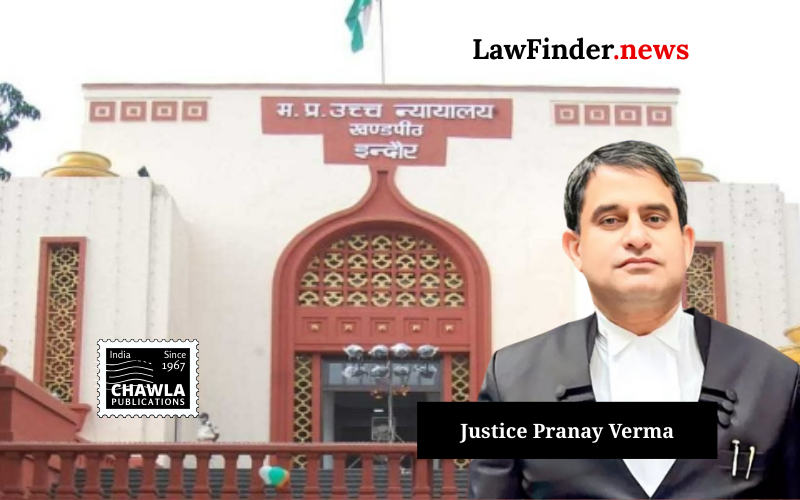
In a significant judgment delivered by the Madhya Pradesh High Court, Justice Pranay Verma presiding over the Indore Bench has ruled in favor of Abdul Majid, the petitioner, who challenged the encroachment notice issued by the Union of India after an unprecedented gap of thirty years. The notice dated November 19, 2025, directed Abdul Majid to remove alleged illegal encroachments on government property, sparking a legal contest over procedural fairness.
Abdul Majid, represented by Senior Advocate Ajay Bagadia alongside Advocate Rizwan Khan, argued that the impugned notice was issued without granting him an opportunity to be heard, thereby violating principles of natural justice. The petitioner highlighted that previous notices were issued in 1996/1997, and no action was taken until the sudden issuance of the current notice, leaving him without a chance to present his case.
Countering the petitioner's claims, Advocate Ashutosh Nimgaonkar, appearing for the respondents, asserted that despite earlier notices, Abdul Majid failed to respond, thus forfeiting his right to further procedural opportunities.
Justice Pranay Verma, after reviewing the circumstances, underscored the necessity of procedural fairness, especially given the extended period since the last notice. The court observed that if the authorities intended to proceed with coercive action after such a long duration, it was incumbent upon them to afford Abdul Majid a fair hearing.
In a directive aimed at upholding the principles of justice, the court ordered Abdul Majid to file a reply along with all pertinent documents within 15 days. The respondents were instructed to provide the petitioner with an opportunity for a hearing, followed by the issuance of a reasoned and speaking order. Importantly, the court restrained any coercive action against Abdul Majid until the completion of this process and for ten days thereafter, should the order be unfavorable to him.
This judgment reinforces the fundamental rights enshrined under Article 226 of the Constitution of India, ensuring that individuals are not subjected to arbitrary administrative actions without due process.
The case, marked as Writ Petition No. 45707 of 2025, underscores the judiciary's role in safeguarding individual rights against administrative overreach, especially in cases involving extended delays by authorities.
Bottom Line:
Encroachment notice issued after 30 years of previous notice requires granting an opportunity of hearing to the petitioner before initiating coercive action.
Statutory provision(s): Article 226 of the Constitution of India
Abdul Majid v. Union of India, (Madhya Pradesh)(Indore) : Law Finder Doc Id # 2811748