University Ordered to Reinstate Dr. Sajan Kurien Mathew and Refer Sexual Harassment Complaint to ICC
In a landmark judgment, the Madhya Pradesh High Court has quashed the termination order of Dr. Sajan Kurien Mathew, an Assistant Professor at a university in Madhya Pradesh, emphasizing the need for compliance with the Sexual Harassment of Women at Workplace (Prevention, Prohibition and Redressal) Act, 2013 (POSH Act) and University Grants Commission (UGC) Regulations. The court's decision underscores the importance of specialized inquiry procedures in handling complaints of sexual harassment within educational institutions.
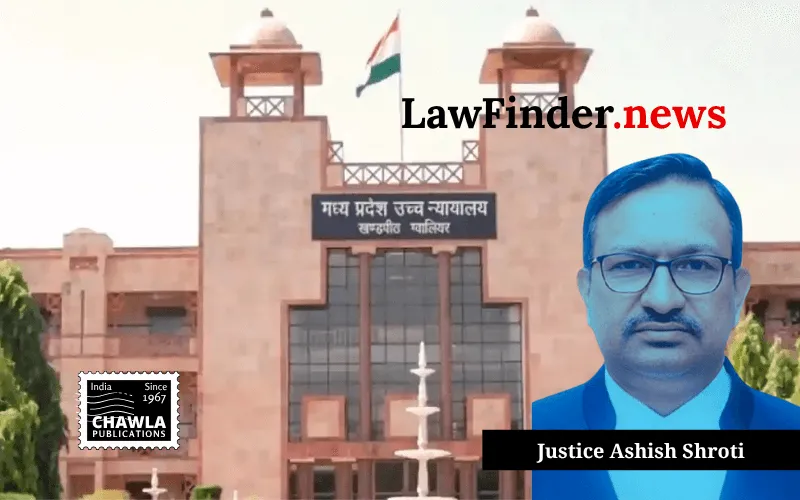
The court, presided by Justice Ashish Shroti, delivered the judgment in response to a writ petition filed under Article 226 of the Indian Constitution. The petitioner, Dr. Mathew, challenged his termination from service based on an inquiry report prepared by an independently appointed inquiry officer, which the court found to be outside the jurisdiction of the prescribed framework under the POSH Act.
In March 2025, a sexual harassment complaint was filed against Dr. Mathew by students, leading to the formation of a Students' Grievance Redressal Committee (SGRC) under UGC's Redressal of Grievances of Students Regulations, 2023. However, the High Court noted that the SGRC does not have the mandate to handle complaints of sexual harassment, as these fall under the jurisdiction of the Internal Complaints Committee (ICC) as per the POSH Act and UGC Regulations, 2015.
The court observed that the university's decision to appoint a retired Principal District Judge as an independent inquiry officer violated the procedural safeguards and confidentiality provisions mandated by the POSH Act. The judgment cited several precedents, including the Vishaka guidelines and the Medha Kotwal Lele case, reinforcing the necessity of adhering to established mechanisms for addressing sexual harassment complaints.
Justice Shroti emphasized that the ICC or, in its absence, the Local Complaints Committee (LCC) is the competent authority to conduct inquiries into sexual harassment allegations. The court directed the university to refer the complaint to the ICC/LCC for a fresh inquiry as per the POSH Act's provisions and ordered the reinstatement of Dr. Mathew at his transferred location in Bhopal.
The High Court's decision highlights the critical role of the POSH Act and UGC Regulations in ensuring gender equality and procedural fairness in handling workplace harassment cases. The judgment serves as a reminder to educational institutions and employers to strictly adhere to the statutory framework designed to protect the rights of women at the workplace.
Bottom line:-
Sexual harassment complaints at workplace must be dealt with under the framework of the POSH Act, 2013, and UGC Regulations, 2015, ensuring specialized inquiry procedures.
Statutory provision(s): Sexual Harassment of Women at Workplace (Prevention, Prohibition and Redressal) Act, 2013, University Grants Commission (Redressal of Grievances of Students) Regulations, 2023, University Grants Commission (Prevention, Prohibition and Redressal of Sexual Harassment of Women Employees and Students in Higher Educational Institutions) Regulations, 2015, Madhya Pradesh Civil Services (Classification, Control & Appeal) Rules, 1966, Constitution of India, 1950 Articles 14, 15, 19(1)(g), 21, and 226